
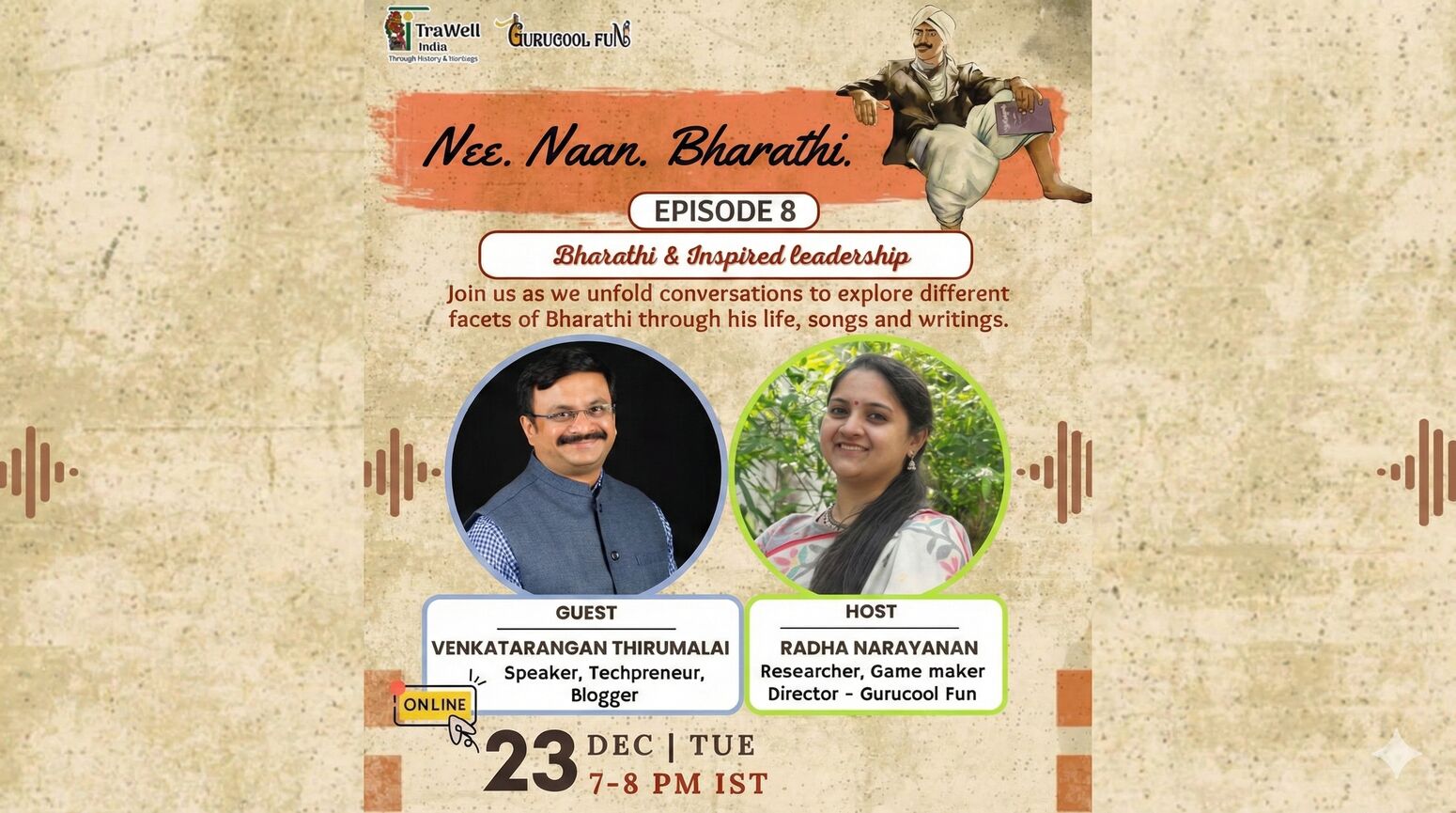
Today I was invited to be a guest on a podcast in a genre that was new to me. It was not about management, entrepreneurship, AI, or technology. The conversation was on how I see the legendary Tamil poet and freedom fighter Thiru Subramania Bharati, and how his ideas continue to inspire leadership even today.
I hesitated at first. My reading of Bharathi’s works is limited, and I am not good at recalling verses from memory. But the host, Ms Radha Narayanan, a friend, insisted that I do this. I am glad I agreed.
Preparing for the conversation meant revisiting Bharathi’s writings and learning more about his life. The launch event of Mr Maalan’s book “உண்மை நின்றிட வேண்டும்“, earlier this month, helped me a great deal. The book focuses on demystifying the many myths around Bharathi. I also spent time with the exhaustive Bharathi collections and books available in the Tamil Nadu Government’s digital library, run by the Tamil Virtual Academy. Having everything in one place made a big difference.
On top of that, Google’s NotebookLM helped me quickly locate specific themes and passages I was looking for. For me, this is where AI fits best. It assists in structuring and navigating material when the narrative is already clear in my head. It does not write my speech. If that were the case, the organisers could simply have played a podcast generated by an AI tool. I am thankful for all these sources and tools that made the preparation enjoyable.
I began by asking a simple question. Why should a leader in 2025 study Bharathi, more than a century after his passing? The world has changed completely in these hundred years. My answer was that Bharathi was not merely a poet. He was an architect of the future. He imagined a new India and wrote boldly about it. In many ways, he wrote the source code for a new era of thought, courage, and action, much like a founder who dreams up and builds a startup from nothing.
For Bharathi, the journey was clear. Ignite the vision. Find the courage to begin. Act. Practise the discipline of action. Channel creative energy. Then build a new world. That is the journey of every leader, seen through Bharathi’s eyes.

Lead and don’t manage
While speaking about leadership, I was reminded of a story about Sue Khim, the founder of Brilliant, the popular learning app. I had written about her in my new Tamil book “செயலிகளின் கதை” on the stories of 52 popular apps. Sue migrated from South Korea to the US as a baby. She found school easy and not very challenging. When she joined the University of Chicago for her bachelor’s degree, her very first class began with the professor dressed like a pirate, complete with an eye patch. He then recited Antoine de Saint-Exupéry’s declaration on leadership. Translated into Tamil, it goes like this:
‘(நீ) கப்பல் கட்டுவதென்றால்,
மரம் சேகரி என்று கட்டளையிடாதே!
வேலைகளைப் பகிர்ந்தளிக்காதே!
மாறாக…
அவர்கள் உள்ளத்தைத் திருப்பு,
அழிவறு கடலின் பேரழகை நோக்கி!’’
This is exactly what Bharathi did through his poems. He did not manage people. He led them by painting a compelling vision of a free and prosperous India. He declared that every Indian is a king. As an individual, what more can one ask for than to be told that you are a king, that your dignity and worth are unquestionable.
பாரத சமுதாயம்
பாரத சமுதாயம் வாழ்கவே — வாழ்க வாழ்க
பாரத சமுதாயம் வாழ்கவே — ஜய ஜய ஜய
இனியொரு விதி செய்வோம் — அதை
எந்த நாளும் காப்போம்
தனியொருவனுக் குணவிலை யெனில்
ஜகத்தினை அழித்திடுவோம் – வாழ்க
எல்லாரும் ஓர்குலம் எல்லாரும் ஓரினம்
எல்லாரும் இந்திய மக்கள்
எல்லாரும் ஓர்நிறை எல்லாரும் ஓர்விலை
எல்லாரும் இந்நாட்டு மன்னர் — நாம்
எல்லாரும் இந்நாட்டு மன்னர் — ஆம்
எல்லாரும் இந்நாட்டு மன்னர் – வாழ்க
விடுதலை
பறைய ருக்கும் இங்கு தீயர்
புலைய ருக்கும் விடுதலை!
பரவரோடு குறவ ருக்கும்
மறவ ருக்கும் விடுதலை!
திறமை கொண்ட தீமையற்ற
தொழில் புரிந்து யாவரும்
தேர்ந்த கல்வி ஞானம் எய்தி
வாழ்வம் இந்த நாட்டிலே.
ஏழை யென்றும் அடிமை யென்றும்
எவனும் இல்லை, ஜாதியில்
இழிவு கொண்ட மனிதரென்பது
இந்தி யாவில் இல்லையே
வாழி கல்வி செல்வம் எய்தி
மனம கிழ்ந்து கூடியே
மனிதர் யாரும் ஒருநிகர்
சமானமாக வாழ்வமே.
Rallying the troops
Bharathi continued to articulate his vision of the future through his poems, which became a rallying cry for generations of Indians. In these verses, he declares freedom and then lays out his mission with remarkable clarity. He even touches upon what we would today call good management practice. Avoid waste. Identify unproductive activity and stop doing it. He also shows deep respect for both agriculture and trade. The insight is striking.
சுதந்திரப் பள்ளு
ஆடுவோமே — பள்ளுப் பாடுவோமே;
ஆனந்த சுதந்திரம் அடைந்துவிட் டோமென்று
எங்கும் சுதந்திரம் என்பதேபேச்சு –
நாம் எல்லோரும் சமமென்பது உறுதியாச்சு
சங்குகொண்டே வெற்றி ஊதுவோமே –
இதைத் தரணிக்கெல்லாமெடுத்து ஓதுவோமே.
உழவுக்கும் தொழிலுக்கும் வந்தனைசெய்வோம் –
வீணில் உண்டுகளித் திருப்போரை நிந்தனைசெய்வோம்
விழலுக்கு நீர்ப் பாய்ச்சி மாயமாட்டோம் –
வெறும் வீணருக்கு உழைத்துடலம் ஓயமாட்டோம்.
நாமிருக்கும் நாடுநமது என்பதறிந்தோம் –
இது நமக்கே உரிமையாம் என்பதறிந்தோம் –
Finance and economy
In the poem below, Bharathi reveals a deep understanding of economics. He moves effortlessly from barter trade to fair-market pricing to the importance of global trade. Think global, act local, long before the phrase became fashionable. He speaks of invention and science, from the need for communication tools to the exploration of the moon and space. His famous line in the Tamil Thai composition captures this spirit perfectly: “சென்றிடுவீர் எட்டுத் திக்கும் கலைச் செல்வங்கள் யாவுங் கொணர்ந்திங்கு சேர்ப்பீர்!”
பாரத நாடு, பாரத தேசம்
பாரத தேசமென்று பெயர்சொல்லுவார் — மிடிப் பயங்கொல்லு வார்துயர்ப் பகைவெல்லுவார்.
வெள்ளிப் பனிமலையின் மீதுலவு வோம் — அடி
மேலைக் கடல்முழுதும் கப்பல் விடுவோம்
…
கங்கை நதிப்புறத்துக் கோதுமைப்பண்டம்
காவிரி வெற்றிலைக்கு மாறு கொள்ளுவோம்
காசி நகர்ப்புலவர் பேசும் உரைதான்
காஞ்சியில் கேட்பதற்கோர் கருவி செய்வோம்
ராசபுத் தானத்து வீரர் தமக்கு
நல்லியற் கன்னடத்துத் தங்கம் அளிப்போம்.
மந்திரம் கற்போம்வினைத் தந்திரங் கற்போம்
வானை யளப்போம் கடல் மீனையளப்போம்
சந்திர மண்டலத்தியல் கண்டுதெளிவோம்
சந்தி தெருப்பெருக்கும் சாத்திரம் கற்போம்.
பட்டினில் ஆடையும் பஞ்சில் உடையும்
பண்ணி மலைகளென வீதி குவிப்போம்
கட்டித் திரவியங்கள் கொண்டுவருவார்
காசினி வணிகருக்கு அவை கொடுப்போம்
காவியம் செய்வோம்நல்ல காடுவளர்ப்போம்
கலை வளர்ப்போம்கொல்ல ருலைவளர்ப்போம்
ஓவியம் செய்வோம்நல்ல ஊசிகள்செய்வோம்
உலகத் தொழிலனைத்து முவந்துசெய்வோம்.
Dignity of labour and ethical leadership
Bharathi’s respect for the dignity of labour is unmistakable. In these lines, he also hints at what ethical leadership truly means.
உயிர் பெற்ற தமிழர் பாட்டு
இனி ஒரு தொல்லையும் இல்லை பிரிவில்லை,
குறையும் கவலையும் இல்லை (இனி)
மேற்குலத்தார் எவர்?
வையகம் காப்பவ ரேனும்
சிறு வாழைப் பழக்கடை வைப்பவ ரேனும்
பொய்யக லத்தொழில் செய்தே
பிறர் போற்றிட வாழ்பவர் எங்கணும் மேலோர்
Focused founders win
On the subject of focus, I was reminded of what I wrote in my book The Founder Catalyst about the temptation to chase every new idea that comes along. I had written, “I remember chasing every new management idea I read about. One week it was lean everything, the next build to scale, then go niche or go home. I wasn’t building a coherent strategy. I felt like I was running a relay race between business books, constantly shifting direction based on the latest trend.”
I see similar thinking in Bharathi’s essays. He speaks about the importance of faith in one idea, symbolised by worshipping one god instead of many. He extends this to meditation on a single powerful thought, one that burns away distractions and noise. Once you avoid the distractions, you can make the impossible possible he says.
யாரைத் தொழுவது ?
பல தேவராக வணங்காமல் ஒரே மூர்த்தியாக தெய்வத்தை உபாஸனை செய்வதற்கும் இந்து மதம் இடம் கொடுக்கிறது. இவ்வித உபாஸனை சித்தத்தை எளிதிலே ஒருமுகப்படுத்தும். பக்திக்கு இதுவே சுலபமான வழி. ஆதலால், வீர சைவன் வீர வைஷ்ணவன் இவர்களுடைய உபாஸனை வேத விரோதமில்லை. இதர தெய்வங்களை விஷயம் தெரியாமல் பழித்தால், அதுதான் வேத விரோதம். வட ஹிந்துஸ்தானத்தில் சில இடங்களில் ராமன் கக்ஷி, கிருஷ்ணன் கக்ஷி, என இரண்டு பகுதிகளாகப் பிரித்து சிலர் பரஸ்பரம்பகையைச் செலுத்துகிறார்கள். இஃதெல்லாம் மடமையின் லக்ஷணம்.
பாரத தேசத்தில் ஒவ்வொருவனும் செய்வதற்குரிய தியானம்
ஒருவன் மனத்தில் நிமிஷத்துக்கு நிமிஷம் தோன்றி மறையுந் தோற்றங்களெல்லாம் தியானமாகமாட்டா. புதர்க் கூட்டத்திலே தீப் பிடித்தாற்போலே மனதிலுள்ள மற்ற கவலைகளையும் எண்ணங்களையும் எரிக்கும் ஒரே ஜோதியாக விளங்கும் பெரிய விருப்பத்தை தியான மென்று கூறுகிறோம். உள்ளத்தில் இவ்வித அக்னி யொன்று வைத்துக் கொண்டிருப்போமானால், உலகத்துக் காரியாதிகளெல்லாம் நமது உள்ள நிலைக்கு இணங்கியவாற மாறுபடுகின்றன.
Practice and rewards
Bharathi always emphasised action over mere talk. Walking the talk mattered to him. His writings on action and on what sustains action are worth paying attention to even today. He also speaks about recognising and rewarding those who act with courage and integrity. In many ways, this reads like guidance for modern HR leaders on spotting real contributors and encouraging them.
வாசக ஞானம்
வியாபாரம், கைத்தொழில், ராஜாங்கச் சீர்திருத்தம் ஜன சமூகத் திருத்தம் முதலிய லௌகிக விவகாரங்கள் எல்லாவற்றிலும், மனிதர் ஏறக்குறைய எல்லா திட்டங்களையும் உணர்ந்து முடித்து விட்டனர். ஒரு துறை அல்லது ஒரு இலாக்காவைப் பற்றிய ஸூக்ஷம தந்திரங்களை மற்றொரு துறையிற் பயிற்சி கொண்டோர் அறியாதிருக்கலாம். ஆனால், அந்தந்த நெறியிற் தக்க பயிற்சி கொண்ட புத்திமான்களுக்கு அதனை யதனைப் பற்றிய நுட்பங்கள் முழுமையும் ஏறக்குறைய நன்றாகத் தெரியும்.
பொதுவாகக் கூறுமிடத்தே, மனித ஜாதியார் அறிவு சம்பந்தப்பட்டமட்டில் மஹா ஸூக்ஷ்மமான பரம ஸத்யங்களை யெல்லாம் கண்டுபிடித்து முடித்து விட்டனர். ஆனால் அறிவுக்குத் தெரிந்ததை மனம் மறவாதே பயிற்சி செய்ய வலிமையற்றதாய் நிற்கிறது. அறிவு சுத்தமான பின்னரும், சித்தசுத்தி ஏற்பட வழியில்லாமல் இருக்கிறது. எனவே, அறிவினால் எட்டிய உண்மைகளை மனிதர் ஒழுக்கத்திலே நடத்திக் காட்டுதல் பெருங்கஷ்டமாக முடிந்திருக்கிறது. ஆத்மஞானத்தின் சம்பந்தமாக கவனிக்குமிடத்தே, இந்த உடைமையைத் தாயுமானவர்,
“வாசக ஞானத்தினால் வருமோ ஸுகம் பாழ்த்த
பூசலென்று போமோ புகலாய் பராபரமே”
என்ற கண்ணியில் வெளியிட்டிருக்கிறார்.
இதன் பொருள் “வெறுமே வாக்களவாக ஏற்பட்டிருக்கும் ஞானத்தினால் ஆனந்த மெய்த முடியவில்லையே? என் செய்வோம்? பாழ்பட்ட மனம் ஓயாமல் பூசலிட்டுக் கொண்டிருக்கிறதே? இந்தப்பூசல் எப்போது தீரும்? கடவுளே, நீ அதனைத் தெரிவிப்பாய்” என்பதாம்.
இதே உண்மையை உலகநீதி விஷயத்தில் ஏற்கும் படி, திருவள்ளுவர்,
“சொல்லுதல் யார்க்கும் எளிய அரியவாம்
சொல்லிய வண்ணம் செயல்”
என்ற குறளால் உணர்த்துகிறார்.
இதன் பொருள் “வாயினால் ஒரு தர்மத்தை எடுத்துச் சொல்லுதல் யாவர்க்கும் சுலபமாக ஏற்பட்டிருக்கிறது. ஆனால், அந்தச் சொல்லின் படி நடத்தல் மிகவும் துர்லபம்” என்பது.
இதற்கென்ன நிவாரணம் செய்வோம்?
தைர்யம் தான் மருந்து.
தற்கால அஸௌகர்யங்களையும் கஷ்ட நஷ்டங்களையும் பொருட்படுத்தாமல் மனிதர் உண்மை என்று கண்டதை நடத்தித் தீர்த்துவிட வேண்டும். அங்ஙனம் தைரியத்துடன் உண்மை நெறி பற்றி நடப்போரை மற்றவர்கள் புகழ்ச்சியாலும் ஸம்மானங்களாலும் ஊக்கப்படுத்த வேண்டும்.
The final line here stayed with me. Bharathi speaks about recognition and rewards with rare clarity and depth.
Teamwork
Bharathi also writes about cooperation and teamwork. In his essay on collective prayer, he explains how coming together, setting aside differences, and acting as one can be a powerful force.
யாரைத் தொழுவது
ஒன்று கூடிக் கடவுளை வணங்கப் போகுமிடத்து, மனிதரின் மனங்கள் ஒருமைப்பட்டு தமக்குள் இருக்கும் ஆத்மாவொருமையை அவர்கள் தெரிந்து கொள்ள இடமுண்டாகுமென்று கருதி முன்னோர் கோவில் வகுத்தார்கள். ஊரொற்றுமை கோவிலால் நிறைவேறும். வீட்டுக்குள் தனியாகச் சிலை வைத்துக் கும்பிடுவது குடும்ப ஒருமை உண்டாகும் பொருட்டாக.
“ஒக்கத் தொழுகிற்றிராயின், கலியுகம் ஒன்றுமில்லை” என்று நம்மாழ்வார் சொல்கிறார். ஹிந்துக்கள் தங்களுடைய வேதப்பொருளை நன்றாகத் தெரிந்துகொண்டு கூடித் தொழுவார்களானால், கலியுகம் நீங்கிப் போய்விடும்.
Against self-doubt and the importance of work
Here, Bharathi speaks about focusing on one’s work, finding joy in it, and not doubting every step along the way.
உழைப்பு
உழைப்பு எப்போதும் உண்டு. இதிலே நான் என்ற பாரத்தை நீக்கிவிட்டு உழைத்தால், வேலை கிறுகிறுவென்று வேகமாகவும் பிழையில்லாமலும் நடக்கும். தன்னைத் தூக்கித் தலையிலே வைத்துக்கொண்டு வேலை செய்தால் வேலை குழம்பும். தன்னை மறந்து, வித்தையின் இன்பத்திலே தன் புத்தி முழுவதையும் செலுத்தி ஆடும் தாசி நன்றாக ஆடுவாள்.
நாம் அழகோ அழகில்லையோ? வகுப்பு சரியாயிருக்கிறதோ இல்லையோ? நெற்றிப் பொட்டு நேரே விழுந்திருக்கிறதோ என்னவோ? பாதி ஆட்டத்தில் முன்னொரு முறை வயிற்றுவலி வந்ததுபோல் வந்துவிடுமோ என்னவோ? என்று தன் சித்தம் குழம்பிப் போயிருந்தால் ஆட்டம் நேரே வராது.
Overall, the discussion with Radha was a lot of fun. More than that, it gave me an opportunity to revisit Bharathi’s works and to rediscover the joy and insight that come from reading him thoughtfully.
I will also share the recording of this conversation here once it becomes available.
Discover more from Mangoidiots
Subscribe to get the latest posts sent to your email.