
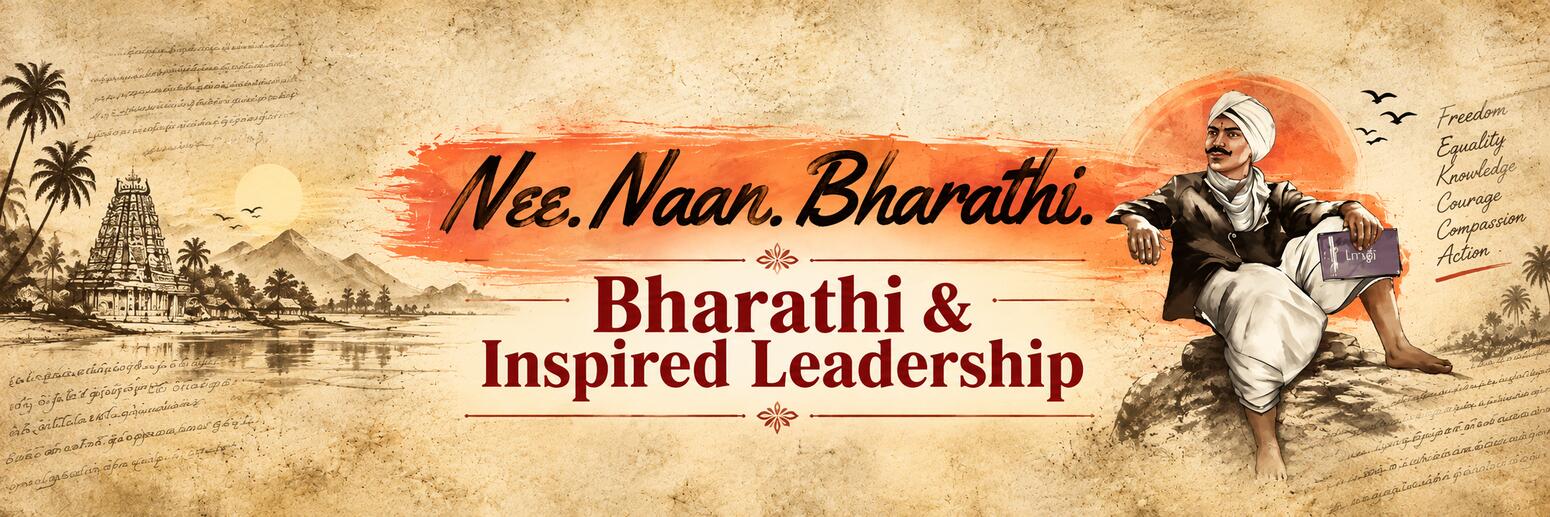
What can a poet who passed away over a hundred years ago teach us about building a startup?
That’s the question I explored in Episode 8 of “நீ நான் பாரதி” (Nee Naan Bharathi), part of Bharathi Utsav 2025 — a series celebrating the life and works of Mahakavi Subramania Bharathi, presented by Gurucool Fun.
In this conversation with Radha Narayanan (Researcher, Game Maker & Director, Gurucool Fun), we read Bharathi not as a poet to be quoted at functions, but as a founder’s field manual — on vision, focus, ethics, dignity of labour, and what actually separates a leader from a manager.
A few things we got into:
• Why “பாரத சமுதாயம்” is essentially a century-old founder’s pitch — “everyone here is a king”
• What “ஆடுவோமே பள்ளுப் பாடுவோமே” teaches about rallying a team around real ownership
• Bharathi’s surprisingly modern take on trade, swadeshi manufacturing, and why no job is beneath dignity
• What “walking the talk” really means — with a Thirukkural, a Thayumanavar quote, and one word: courage
• What a “Bharathi-trained AI chatbot” would flatly refuse to make up
🎥 Watch the full episode (English + Tamil captions available):
Below is an abridged AI transcript of the conversation.
How did Bharathi first come into your life?
Honestly, if I sit down and try to trace it, it’s hard — his songs are so woven into Tamil cinema that growing up, you often can’t tell what’s a film song and what’s actually Bharathiyar. But if I have to name one moment: I was in tenth or eleventh standard, at Shrine Vailankanni Sr. Sec. School, T. Nagar, a CBSE school — in the late eighties. Our Tamil teacher then was Thiru P.K. Prabhakaran, now a well-known writer and speaker. He gave us an assignment to interview poets and write about them, and one of my pieces needed a Bharathi reference. I remember thinking, “Will I even understand him?” I went to the library, picked up his poetry — and it turned out I understood far more than I expected. That was my real introduction.
And that’s the beauty of Bharathi — there’s no barrier to entry. You can engage with him lightly, or go deep enough to do a PhD on him. A scholarly reading is available; so is a two-minute dose of courage, the way people reach for a Vivekananda quote. He’s there for everyone.
Bharathi was a poet, a lyricist, a nationalist — but was he a leader, or a manager?
Let me answer that with a story from my new book, செயலிகளின் கதை, where I wrote about fifty-two startup founders. One of them is Sue Khim, founder of Brilliant.org, a learning app. She was an exceptionally sharp kid — a teacher once told her mother to make her do less homework. On her first day at the University of Chicago, a professor walked onto the stage dressed as a pirate and thundered out a line from Antoine de Saint-Exupéry:
“If you want to build a ship, don’t drum up the men to gather wood, divide the work and give orders — instead, teach them to yearn for the vast and endless sea.“
That’s the difference between a leader and a manager. A manager distributes work — that’s literally what the word means; he manages, he divides. The British who ruled India were managers: they never gave us a vision we wanted to belong to, so they couldn’t stay. Bharathi did the opposite. Take his poem பாரத சமுதாயம் (Bharata Samudayam):
எல்லாரும் ஓர்குலம் எல்லாரும் ஓரினம்
எல்லாரும் இந்திய மக்கள்
எல்லாரும் ஓர்நிறை எல்லாரும் ஓர்விலை
எல்லாரும் இந்நாட்டு மன்னர் — நாம்
எல்லாரும் இந்நாட்டு மன்னர் — ஆம்
எல்லாரும் இந்நாட்டு மன்னர் — வாழ்க
(Everyone is one clan, everyone is one people; everyone is equal in worth. Everyone here is the sovereign of this land.)
That’s the ultimate vision statement — “you are the king.” It’s exactly what every founder tries to do today when they tell a team with zero revenue, “we will be a unicorn, you’ll be a millionaire, you’ll drive a Mercedes-Benz.” Bharathi was selling the same size of dream, a century earlier.
How did he rally people — and keep them aligned to the vision?
Look at ஆடுவோமே பள்ளுப் பாடுவோமே:
எங்கும் சுதந்திரம் என்பதே பேச்சு —
நாம் எல்லோரும் சமமென்பது உறுதியாச்சு
…
உழவுக்கும் தொழிலுக்கும் வந்தனை செய்வோம் —
வீணில் உண்டு களித்திருப்போரை நிந்தனை செய்வோம்
விழலுக்கு நீர்ப் பாய்ச்சி மாயமாட்டோம் —
வெறும் வீணருக்கு உழைத்துடலம் ஓயமாட்டோம்.
(Everywhere the talk is of freedom — we are all equal, that’s settled. We’ll honour farming and enterprise; we’ll shame the idle; we won’t waste water on barren ground, or wear ourselves out working for the worthless.)
That’s cash-flow discipline and HR policy in two lines — cut the wasteful spend, don’t reward people who don’t deserve it. And then he closes the loop:
நாமிருக்கும் நாடுநமது என்பதறிந்தோம் —
இது நமக்கே உரிமையாம் என்பதறிந்தோம்.
(We know the land we live in is ours; we know this is our own right.)
That’s it. That’s the entire rallying cry. Compare it to a founder today saying “you have sweat equity, you have ESOPs, you have skin in the game.” Once someone believes something is theirs, you don’t need to motivate them toward salary hikes or perks — the instinct to protect and grow what’s yours takes over.
Did Bharathi ever write about the practical, economic side of nation-building?
Extensively — see பாரத நாடு, பாரத தேசம்:
கங்கை நதிப்புறத்துக் கோதுமைப்பண்டம்
காவிரி வெற்றிலைக்கு மாறு கொள்ளுவோம்
காசி நகர்ப்புலவர் பேசும் உரைதான்
காஞ்சியில் கேட்பதற்கோர் கருவி செய்வோம்
…
மந்திரம் கற்போம்வினைத் தந்திரங் கற்போம்
வானை யளப்போம் கடல் மீனையளப்போம்
சந்திர மண்டலத்தியல் கண்டுதெளிவோம்
சந்தி தெருப்பெருக்கும் சாத்திரம் கற்போம்.
…
காவியம் செய்வோம்நல்ல காடுவளர்ப்போம்
கலை வளர்ப்போம்கொல்ல ருலைவளர்ப்போம்
ஓவியம் செய்வோம்நல்ல ஊசிகள்செய்வோம்
உலகத் தொழிலனைத்து முவந்துசெய்வோம்.
(We’ll trade Ganges wheat for Kaveri betel-leaf — barter economics, a century before we started re-discovering it in policy papers. We’ll build an instrument so a word spoken in Kashi is heard in Kanchi — telephony, imagined as science fiction. We’ll study the moon’s course, and just as readily learn the humble craft of sweeping a street corner. We’ll write epics, grow forests, craft art, work the smith’s forge, paint, and even make needles — we’ll do every trade in the world, gladly.)
That last line is remarkably current — Mr Sridhar Vembu recently tweeted that India has forgotten how to manufacture something as basic as a nail cutter, with everything stamped “Made in China.” Bharathi says the same: no trade is beneath us, whether it’s high-tech telecommunications or making needles for the textile industry. And crucially, right after the swadeshi verses, he adds “உலகத் தொழிலனைத்தும் உவந்து செய்வோம்” — do every trade in the world, willingly. It’s not inward-looking nationalism; it’s be rooted locally, and go compete globally.
What did he say about the dignity of labour?
In உயிர் பெற்ற தமிழர் பாட்டு, he asks directly — who is truly noble (மேற்குலத்தார்)?
வையகம் காப்பவ ரேனும்
சிறு வாழைப் பழக்கடை வைப்பவ ரேனும்
பொய்யக லத்தொழில் செய்தே
பிறர் போற்றிட வாழ்பவர் எங்கணும் மேலோர்.
(Whether you rule the earth or run a small banana stall — whoever does their work honestly, without falsehood, and lives in a way others respect, is noble, wherever they are.)
A king and a fruit-seller, judged by the same yardstick: did you do your work without lying, in a way that earns people’s regard? That’s the whole idea of dignity of labour and ethical leadership, in four lines.
Bharathi talked, but did he also walk the talk?
He did, and he wrote the instruction manual for it, in the essay பாரத தேசத்தில் ஒவ்வொருவரும் செய்வதற்குரிய தியானம் (“The meditation every person in Bharat ought to practise”). He opens almost sarcastically — we already know everything about business, governance, and social reform:
வியாபாரம், கைத்தொழில், ராஜாங்கத் திருத்தம், ஜனசமூகத் திருத்தம் முதலிய லௌகீக விவகாரங்கள் எல்லாவற்றிற்கும் மனிதர் ஏறக்குறைய எல்லாத் திட்டங்களையும் உணர்ந்து முடித்துவிட்டனர்.
Sound familiar? Today we’d say “AI can answer any question you ask it.” Knowledge was never the problem. The next line is the diagnosis:
ஆனால் அறிவுக்குத் தெரிந்ததை மனம் மறவாதே பயிற்சி செய்ய வலிமையற்றதாய் நிற்கிறது.
(But the mind stands powerless to practise, without forgetting, what the intellect already knows.) He brings in Thayumanavar to reinforce it, and then — in the same essay — quotes a Thirukkural that could be the tagline for any execution-focused leadership talk:
சொல்லுதல் யார்க்கும் எளிய அரிய வாம் சொல்லிய வண்ணம் செயல்.
(Talking is easy for anyone; doing exactly as you said is the hard part.)
His prescription is one word: தைரியம் — courage.
தற்கால அசௌகரியங்களையும், கஷ்ட நஷ்டங்களையும் பொருட்படுத்தாமல் மனிதர் உண்மையென்று கண்டதை நடத்தித் தீர்த்துவிட வேண்டும்.
(Setting aside present discomforts and losses, one must act on what one has recognised as true, and see it through to completion.) Not “be brave” as a state of mind — be brave and finish the job. No excuses about the internet being down or the customer changing requirements. Finish strong, not just start strong.
And what about rewarding the people who actually do this?
This is where he closes the essay, and it’s the line that most struck me on a re-reading for this talk:
அங்ஙனம் தைரியத்துடன் உண்மை நெறி பற்றி நடப்போரை மற்றவர்கள் புகழ்ச்சியாலும் ஸம்மானங்களாலும் ஊக்கப்படுத்த வேண்டும்.
(Those who courageously walk the path of truth must be encouraged by others through both praise and material reward.) Recognition alone — a certificate, a “best employee” title — isn’t enough; it has to come with real reward. This is the same principle Dr Kalam describes in Agni Chirakugal (Wings of Fire): after a DRDO missile failure, his boss insisted on facing the press himself, but after the next success, he told Kalam, “This time, you go.” The leader owns failure; the team shares success and rewards. The buck that stops with a founder isn’t just money — it’s responsibility and accountability, while rewards flow outward to the people who earned them.
If you built a Bharathi-based AI chatbot today, what’s the one rule you wouldn’t compromise on?
Truth. AI hallucinates — or, in the politer modern term, “confabulates”: it states things confidently without any intention to deceive. The instruction I’d give a Bharathi chatbot is simple: only answer from verified sources, and if it isn’t there, say nothing. Never let anything slip in that isn’t genuinely his. And that’s not just an AI-design principle — it’s Bharathi’s own standard. Every founder today has a social media presence and endless content, but with or without AI, people can tell quickly how authentic a founder or brand really is. That authenticity — telling the truth, not performing it — is what Bharathi was all about. Be yourself.
Bharathi Utsav 2025 was organised to celebrate the life and works of Tamil poet Subramania Bharathi. This piece is adapted from Episode 8 of the podcast series “நீ நான் பாரதி” (Nee Naan Bharathi), a conversation between host Radha Narayanan and guest Venkatarangan Thirumalai.

#Bharathiyar #பாரதியார் #NeeNaanBharathi #BharathiUtsav2025 #Leadership #FounderLessons #TamilLiterature
Discover more from Mangoidiots.com
Subscribe to get the latest posts sent to your email.