

Christmas and New Year aren’t complete without a tasty plum cake, are they? Growing up, my uncle—a professor in Mahe, Pondicherry (technically Kerala)—would bring us kids a full plum cake every Christmas. We would share it with the family (because we had to), but those were simpler, sweeter days. Later, during my years in business, a plum cake would somehow find its way to me every holiday season.
This year? Not a crumb. I was contemplating my cake-less fate when a good friend’s tweet came to the rescue on Twitter (X), recommending Pandhal Cake Shop in Kochi. A quick Amazon India order later, their Matured Plum Cake Eggless landed at my door in two days. The cake came in a beautiful tin box , wrapped in multiple layers to ensure the aroma stayed intact, and not a drop of butter dared to leak. It was so irresistible, that I had to fight my instincts to save one piece for tomorrow (a battle I barely won). If there’s one thing Keralites have perfected over the years (other than their legendary coconut oil magic), it’s baking the most scrumptious plum cakes.
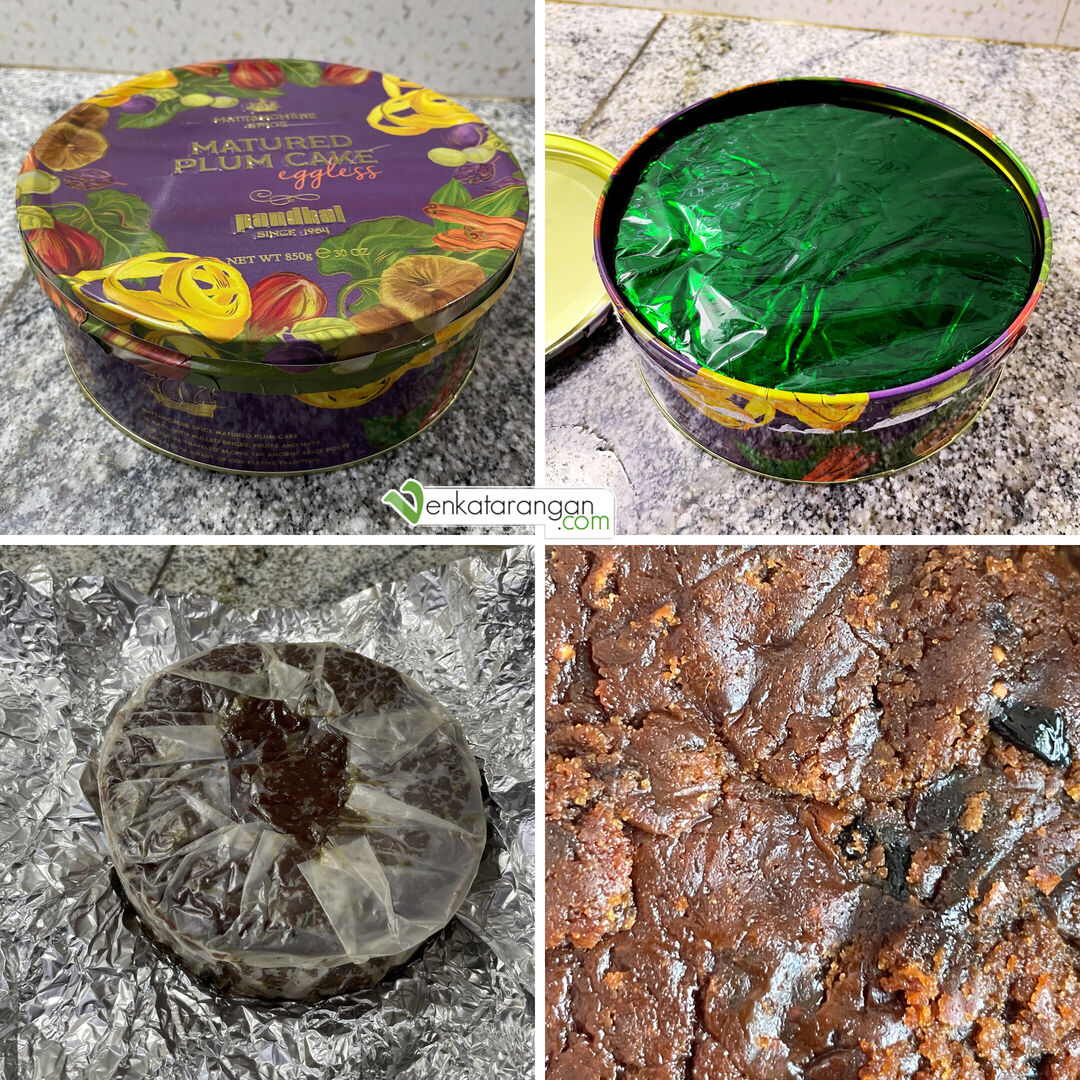
Wondering about the origins of plum cake, I did some digging and found that the “plum” in the name doesn’t refer to the fruit we know today. In medieval England, “plum” was a generic term for dried fruits like raisins, currants, and prunes. The earliest version of the plum cake was actually a porridge-like dish made with oats, dried fruits, and spices, and served during winter festivals. By the 16th century, it evolved into a thicker pudding, and eventually, with the addition of flour and eggs, it transformed into the cake we love today. British colonists and missionaries brought the tradition of plum cake to their colonies, including India. In Kerala, the recipe was embraced and adapted by the local Christian community, especially Syrian Christians, who made it a Christmas staple. The addition of local spices like cardamom and the practice of soaking dry fruits in rum or brandy for weeks gave Kerala’s plum cake its unique, rich flavour. Today, it’s celebrated as one of the best versions of plum cake in the world. While Kerala is famous for its plum cakes, other regions in India have their own delicious takes. In Goa, plum cakes often feature local feni instead of rum. In Tamil Nadu, Kolkata, and Mumbai, bakeries offer their own unique versions, catering to diverse tastes, including eggless options.
While the festive indulgence is worth every bite, it’s a good idea to keep things balanced—throw in a few veggies and fruit salads on the side to soothe your conscience (and your gut).
Disclosure: I write reviews about (products or restaurants) that I have (bought for my usage, or visited) and paid in full. There were no sponsorship or advertisement, or commission of any sort involved in this post.
Discover more from Mangoidiots
Subscribe to get the latest posts sent to your email.