
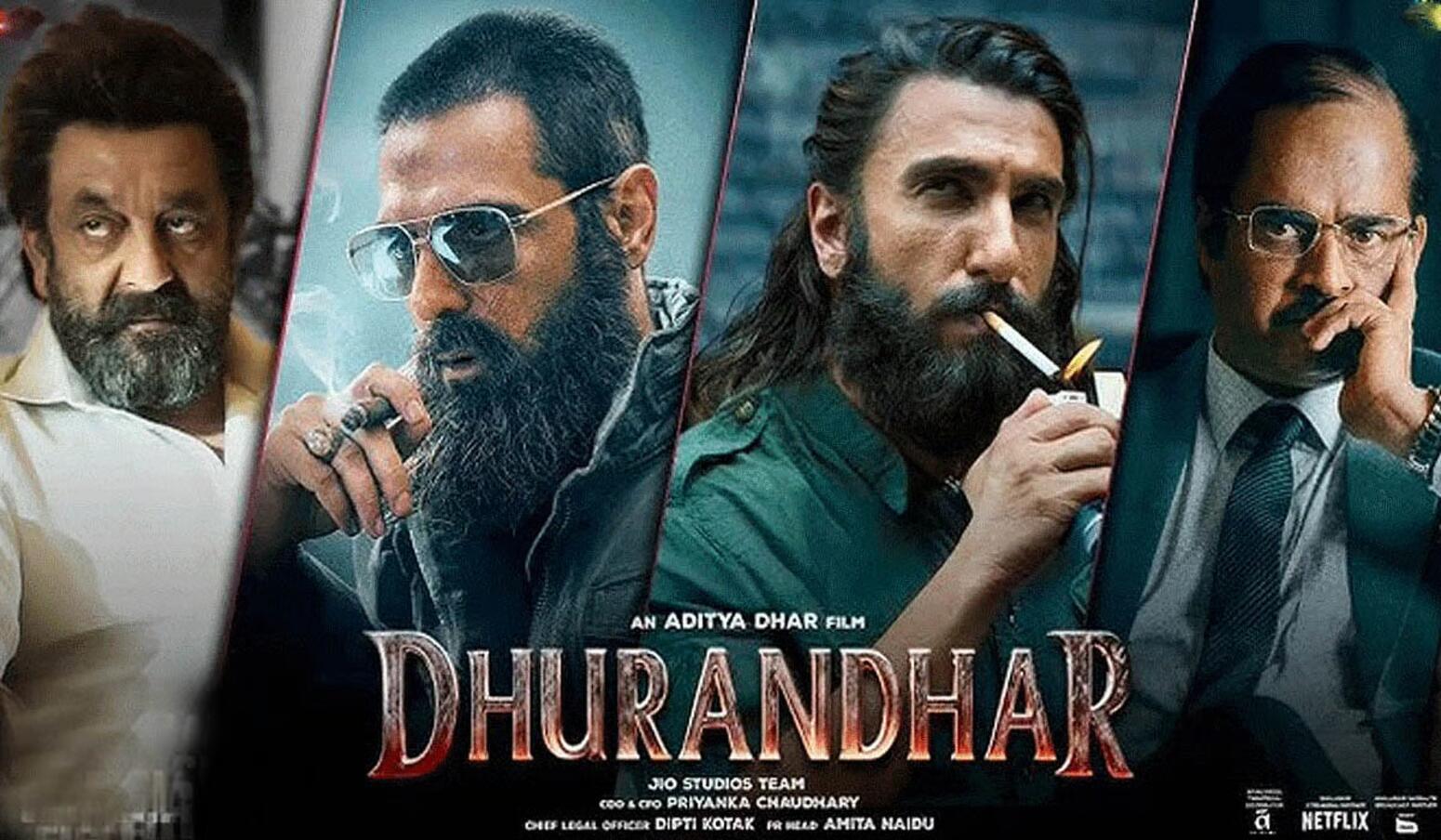
 Dhurandhar is a familiar spy thriller made on a very large canvas. What stood out to me immediately was the setting. Almost the entire story unfolds in Karachi, Pakistan, which is a rarity in Indian cinema given the long-standing hostility between the two neighbours. For me, the film largely lives up to the expectations built around it. I also felt the timing of the release worked in its favour. Operation Sindoor had happened just a few months earlier and was still fresh in the minds of Indians, and that clearly amplified the film’s impact. A big part of the hype comes from its deliberate attempt to stir nationalist emotions, especially by inserting real visuals of cross-border terrorist attacks in India. Even with a runtime stretching beyond three and a half hours, it managed to keep me engaged for most of its duration. Mangoidiots gives Dhurandhar a Ripe.
Let me be clear. This is a propaganda film, and it will please the current ruling establishment in Delhi. That said, there are two things worth noting. First, for a Hindi film released three weeks ago, the number of theatre screens it secured was unusually high, reportedly more than Avatar, and many of these shows were running houseful even in Chennai. Chennai is not exactly known to be friendly to the ideology of the current ruling establishment in Delhi. This by itself speaks to the film’s commercial success. Second, this is historical fiction, much like Ponniyin Selvan. Treating it as anything more than that, and trying to map real-world politics and identities too literally, would be a mistake, even though that is probably what the makers would have liked. I kept these two points in mind and was able to enjoy the film thoroughly, thanks to the performances and the well-written screenplay. I would recommend you do the same if you plan to watch Dhurandhar.
There is nothing extraordinary about the core idea of Dhurandhar. It follows the familiar template of a spy from one country attempting, against all odds, to embed himself deep inside the nerve centre of an adversary nation. We have seen this done earlier, and done very well, by Alia Bhatt in Raazi (2018) and by Kamal Haasan in Viswaroopam (2013). Here, Ranveer Singh plays Hamza Ali Mazari, who lands in the dangerous, gangster-infested zones of Karachi and slowly works his way into the inner circle of a powerful local don. The rest of the film explores how gangster networks, power equations, and political machinery operate within Karachi and Pakistan. The first part ends with Hamza reaching striking distance from the throne of the city’s kingpin.
Ranveer Singh is easily the biggest highlight of the film. His energy levels remain consistently high, and his performance in the action sequences is outstanding. Equally impressive is Akshaye Khanna as Rehman Dakait, the feared gangster. Sanjay Dutt, playing a police SP, brings a solid presence. R Madhavan, as the Director of the Indian intelligence agency, has a small but important role, and it clearly feels like a character that will grow in importance in the sequel. It was also surprising to see Sara Arjun, the little girl from Saivam (2014), now all grown up and playing the romantic interest opposite Ranveer Singh. She performs with notable maturity, and I wish her a long and successful career.
The film mixes fictional events with real historical footage, including visuals from the 1999 IC814 Indian Airlines hijacking to Kandahar, the 2001 Indian Parliament attack, and the 2008 Mumbai terror attacks. From a pure spy-thriller perspective, these inclusions are not really necessary. However, they are extremely effective in grabbing the audience’s complete attention. Inside the theatre, there was an eerie silence during these sequences, almost as a mark of respect to the victims and to the nation. The film also makes open references to corruption, cowardice, and lack of patriotism among elected representatives at the highest levels. This clearly feels like a political attack aimed at the present-day opposition and earlier ruling parties. The resemblance of R Madhavan’s character to India’s current National Security Advisor, Ajit Doval, taps into the widely circulated WhatsApp narratives about his past as a spy in Pakistan, and this definitely adds to the excitement for the audience.
Director Aditya Dhar deserves credit for delivering an engaging film and for fully utilising the massive canvas available to him. The grandeur in several scenes, involving hundreds of actors, is impressive. The climax fight sequence set in the forest, along with the car chase, is captured brilliantly by cinematographer Vikash Nowlakha.
Overall, if you are able to watch Dhurandhar purely as an action thriller, you are likely to enjoy it. This is a film that deserves to be seen on the big screen for the scale and experience it offers. It is not something meant for a small television screen on OTT. I do wish the runtime had been trimmed to around three hours.
Discover more from Mangoidiots.com
Subscribe to get the latest posts sent to your email.