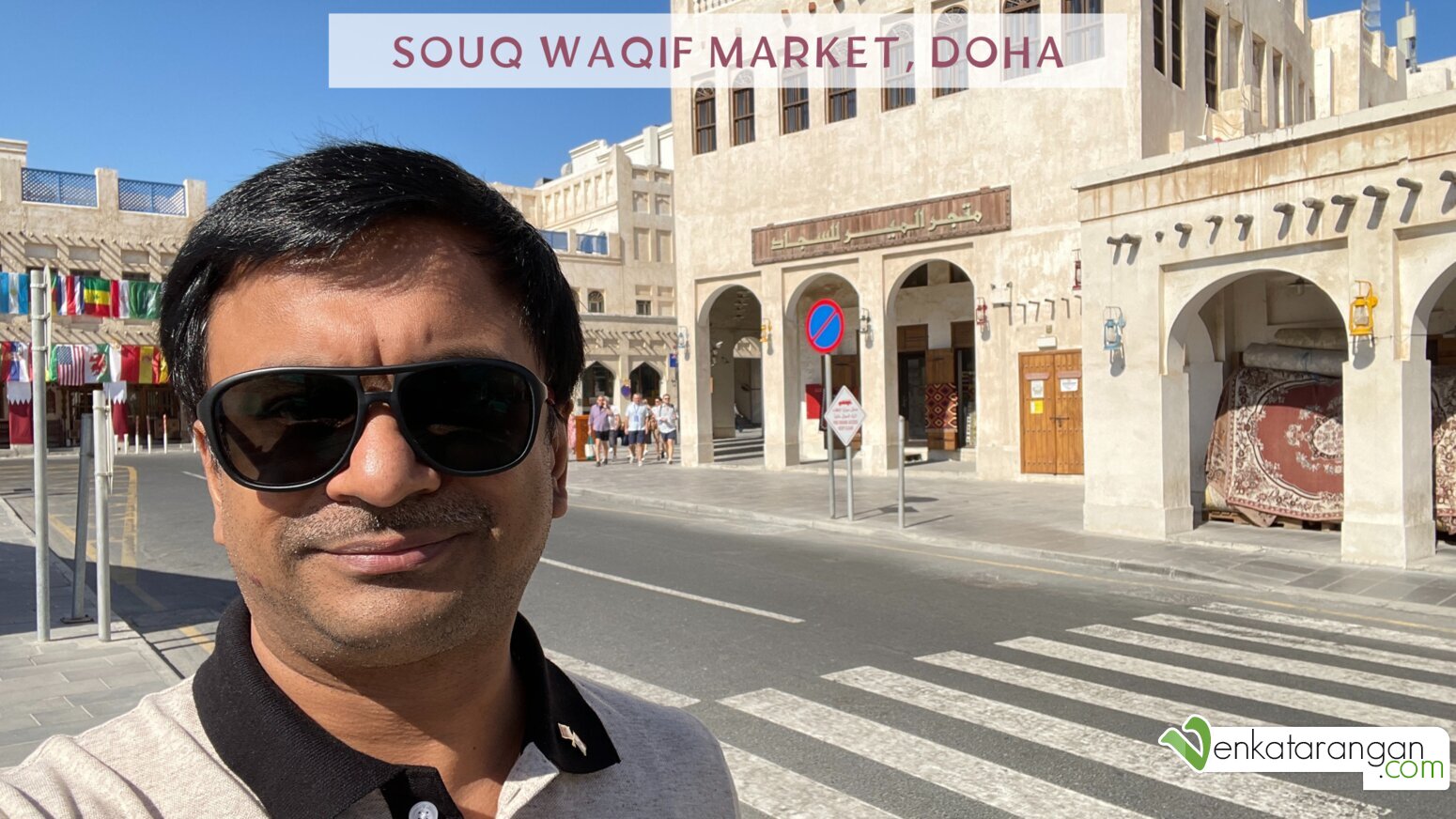
As you would have read in my earlier posts, I was in Doha, Qatar, last week with my friends for the FIFA World Cup 2022. On our first day, we visited the National Museum of Qatar, and the second day was spent watching a match. The next stop on our itinerary was Souq Waqif, a traditional market whose name translates to “standing market.” Known for its authentic Qatari architecture, local goods, and cultural experiences, it is one of the must-visit places in Doha.
First Impressions
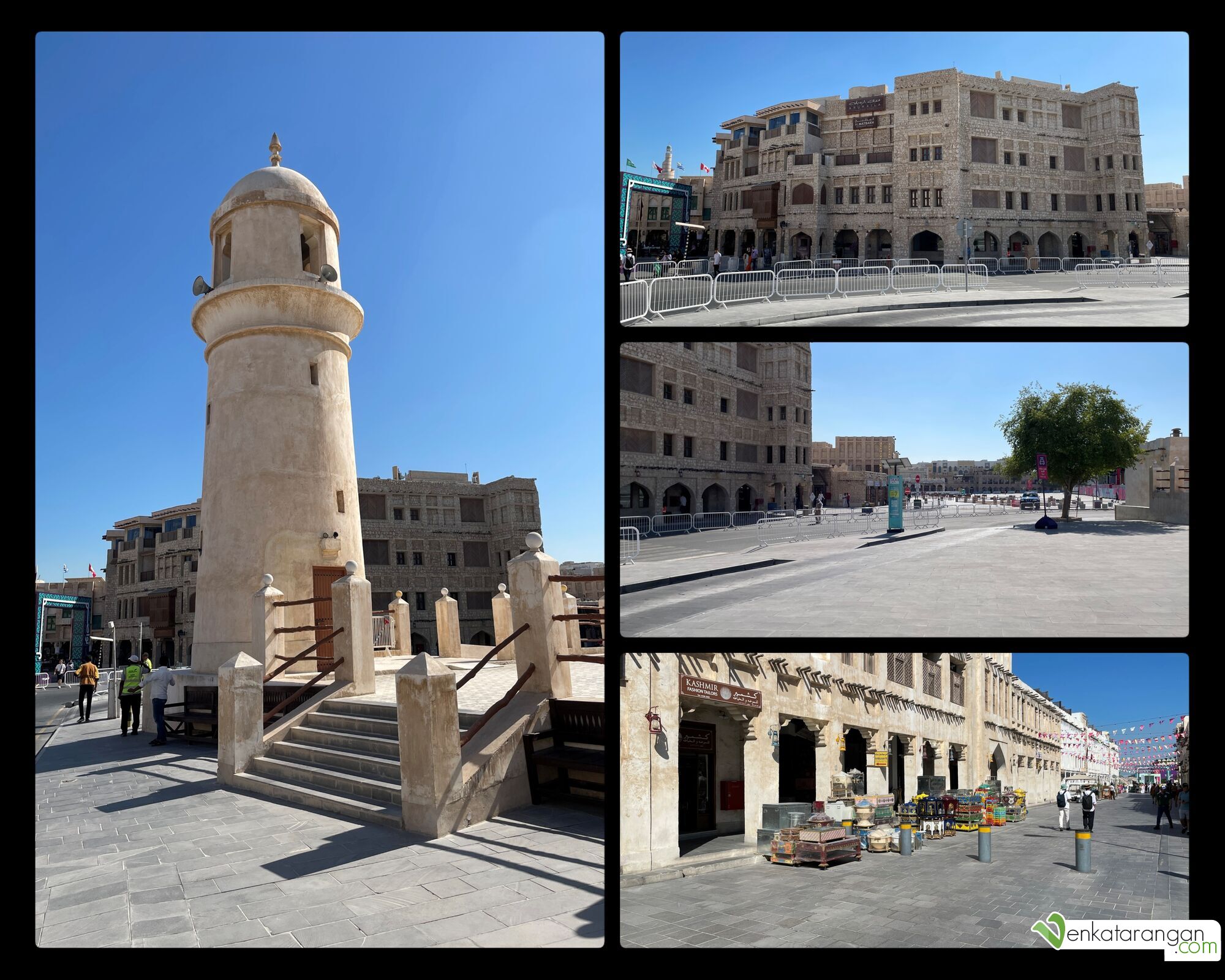
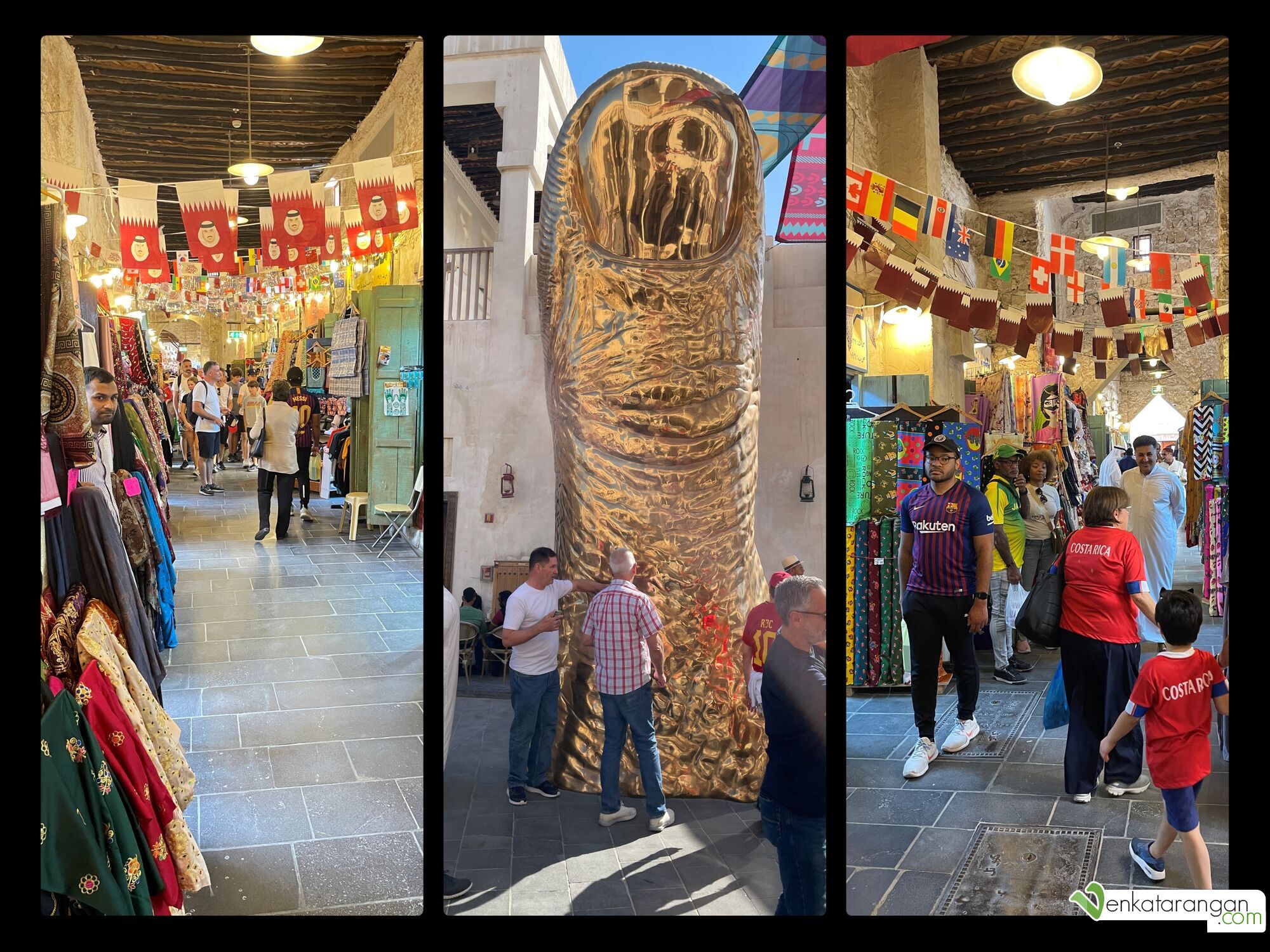
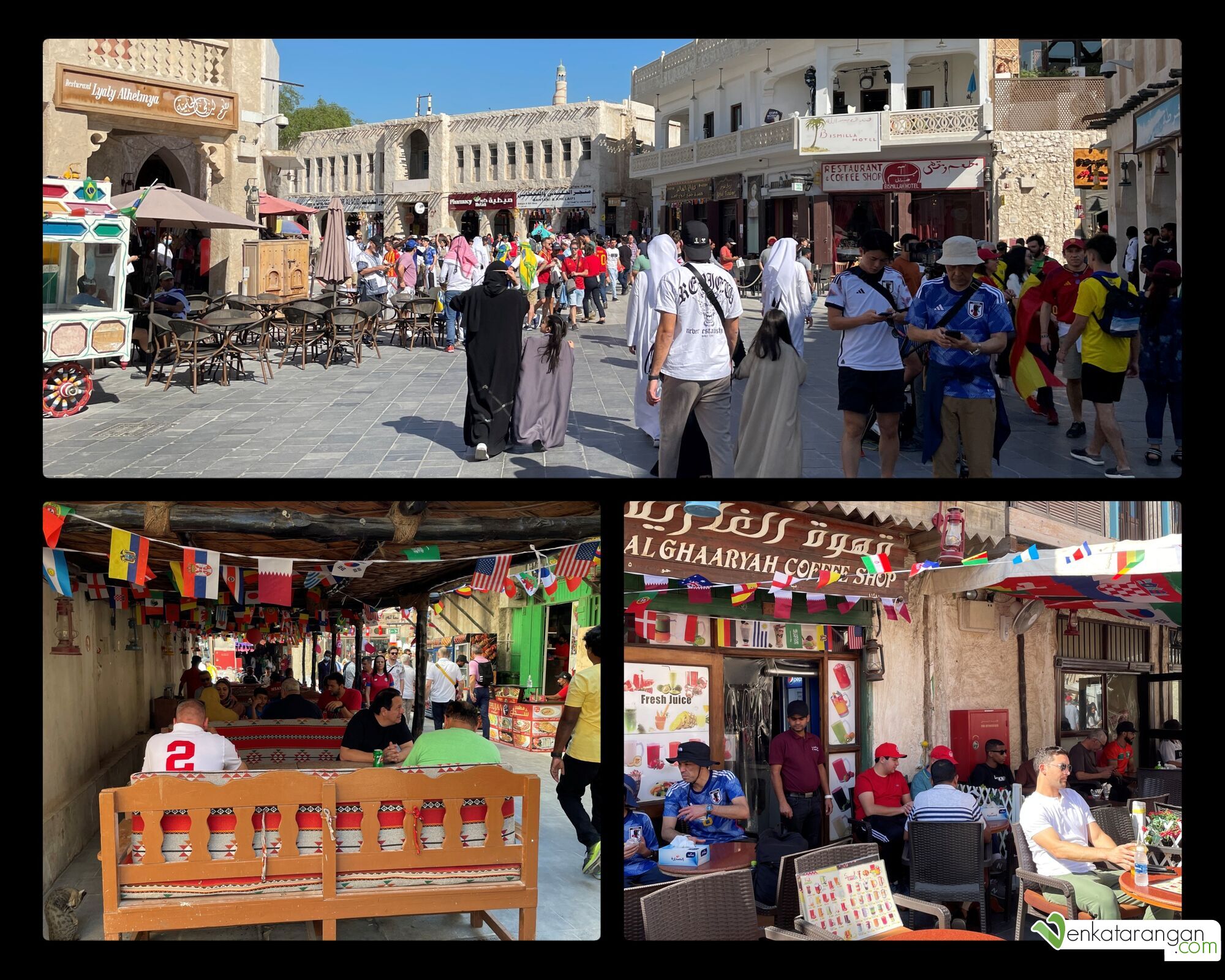
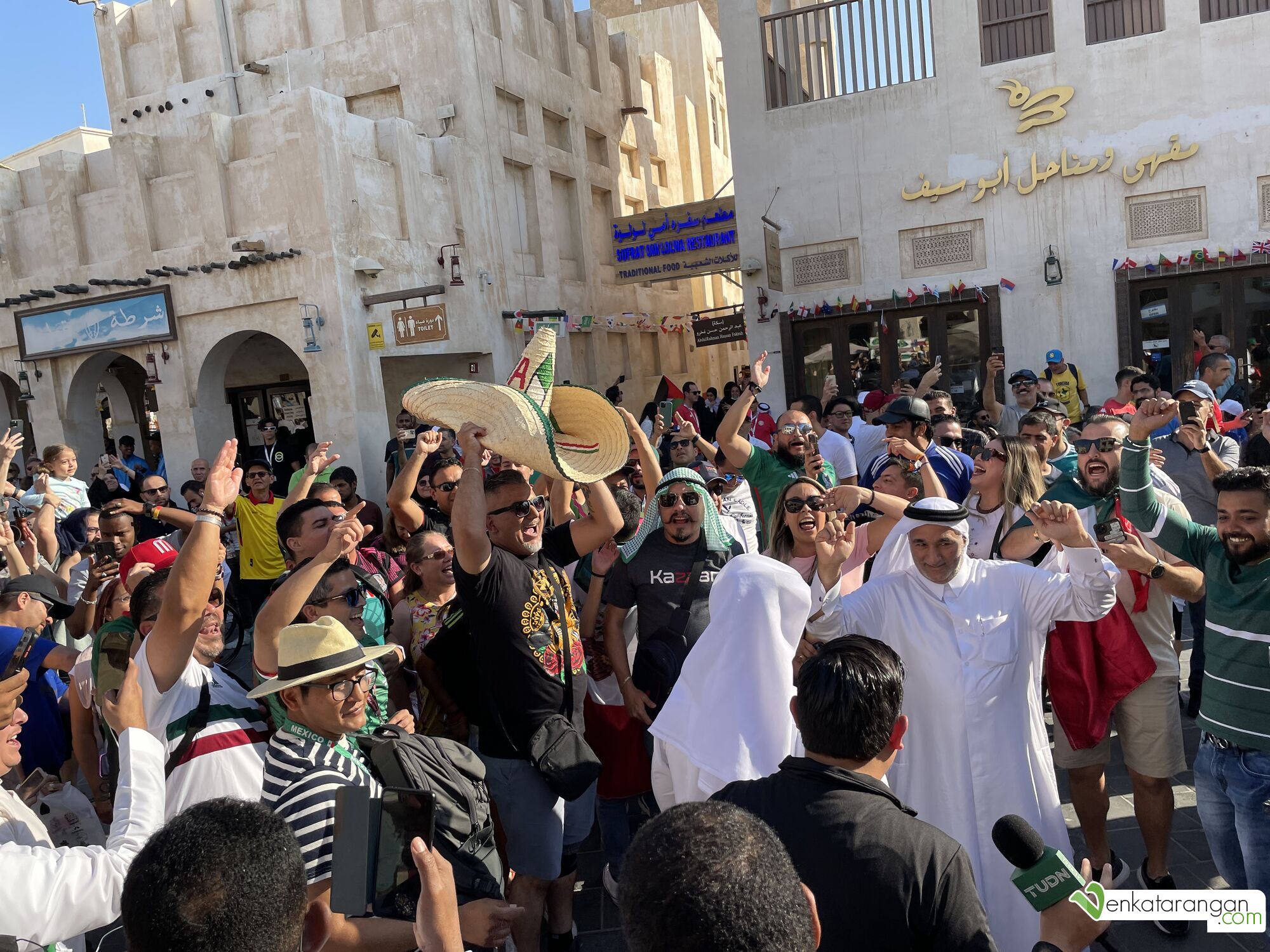
When we took a taxi to the market, we were dropped almost a mile away. The main roads had been cordoned off as a security measure due to the influx of football fans. As we walked under the bright desert sun, we were thankful for Doha’s winter season—it was pleasant rather than scorching. At first, the streets were white, wide, and eerily empty, and we wondered if the shops were even open. But as we reached the market alleys, the scene transformed. Narrow lanes came alive with people, bustling shops, and even small celebrations. Music, dance, and groups of fans in colourful team costumes created a festive atmosphere.
A Marketplace Full of Surprises
The market exudes a charm similar to European-style coffee streets. Many small coffee shops and eateries had outdoor seating, perfect for people-watching while sipping on Karāk tea. As we strolled, a giant golden sculpture caught our eye—Le Pouce, a massive thumb-shaped artwork by French artist César Baldaccini. Displayed here by Qatar Museums, the sculpture symbolizes Qatar’s Asian Cup win in 2019 and perfectly blends classic and modern design in Souq’s setting.


Unique Finds and Crafts
One of the highlights for us was the perfume shops where we could sample primary scents and have a custom perfume mixed to our liking. We also noticed many shops selling unofficial football jerseys at a fraction of the price of the official merchandise found in stadium stores.
There was a candy shop that stood out—filled with Turkish sweets and toffees. To our surprise, the shop’s manager was from Madurai, Tamil Nadu. Chatting with him in Tamil added a personal touch and made us feel at home. Along the pavements, we saw beautifully made carpets in vibrant hues, their colours catching the sunlight.
Authentic Souvenirs and Cultural Displays
Walking deeper into the Souq, we came across a fascinating range of items:
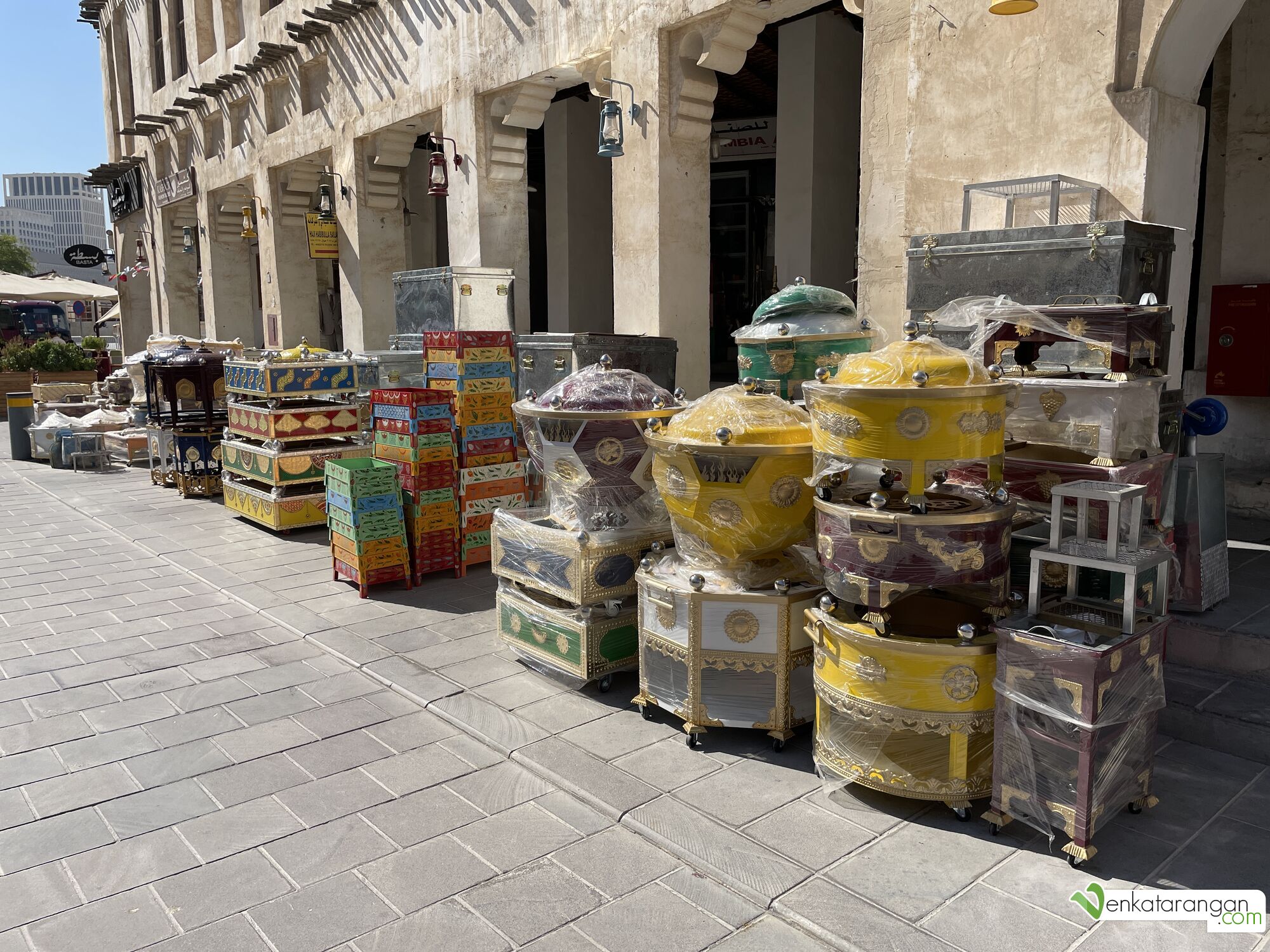
- Metal stoves, called Mabkhara or charcoal burners, are used for burning incense.
- Colourful wooden storage boxes for jewellery and spices.
- Metallic trunks and wooden tables are designed to serve Arabic coffee (Qahwa).
- Dried spices (pepper, cardamom, cloves, turmeric) and dried seeds like fenugreek and cumin.
- Dried flowers such as Rose, Hibiscus, Lavender, and Chamomile—a variety I had never seen before.
- Dried fruits, dried limes (used in Loomi tea and stews like Maraq soup), garlic, and even alum for healing cuts.
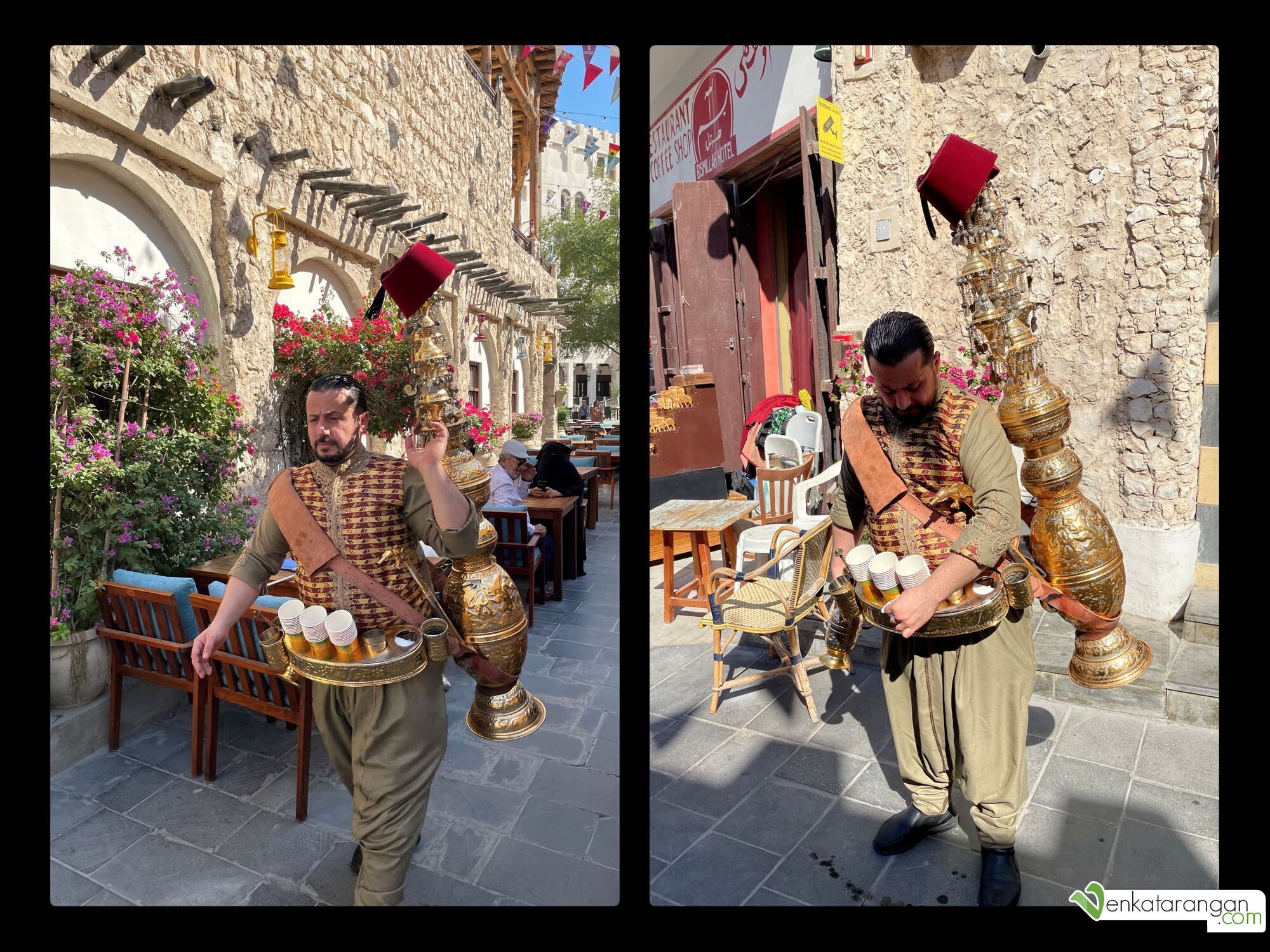
One of the most interesting sights was a man dressed in khaki carrying large brass containers called Dallah. He was serving spice tea, locally known as Karāk tea, to customers. Known as a “Dallah Carrier,” he added an old-world charm to the place.
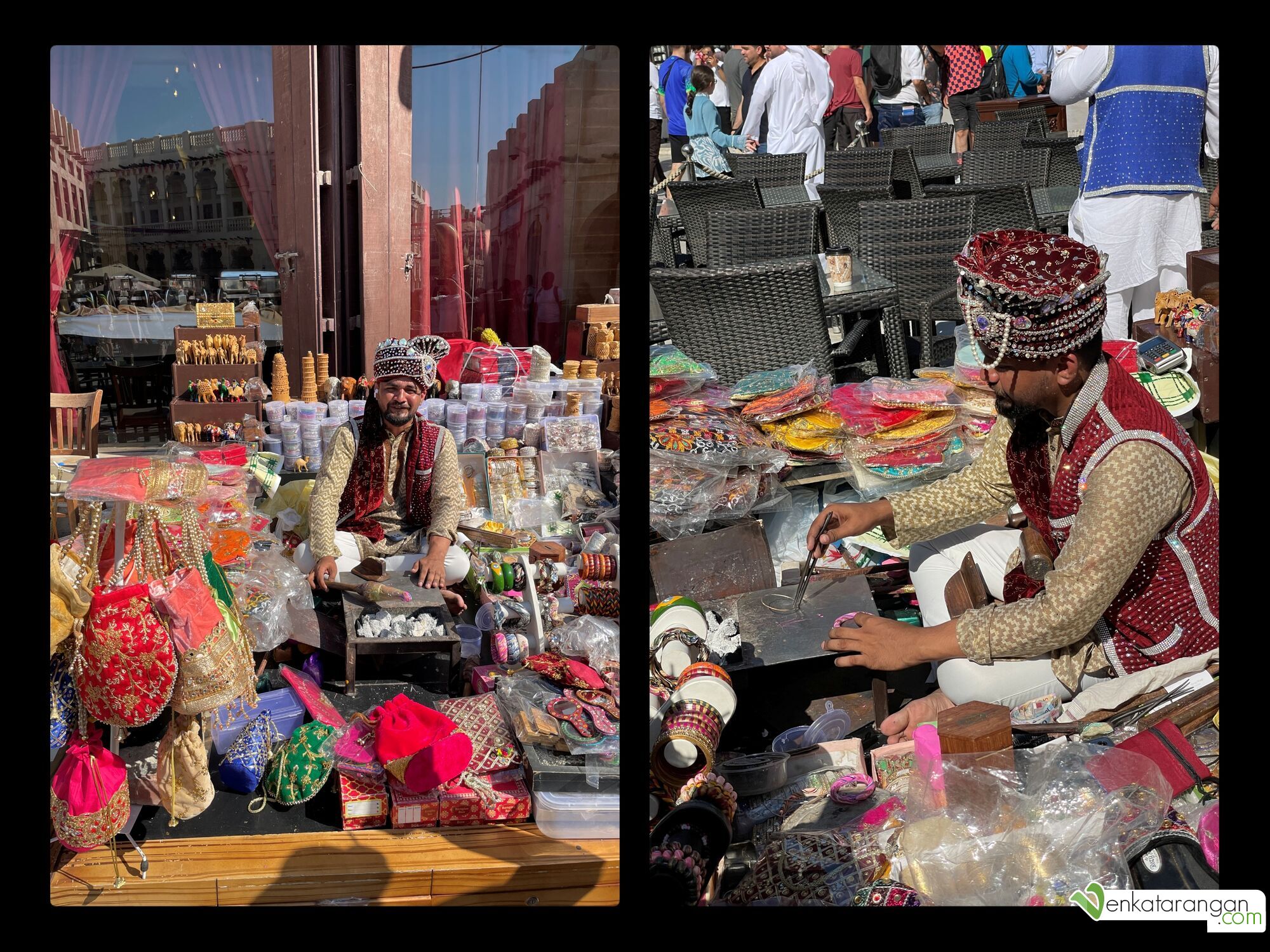
Another eye-catching display was a craftsman, dressed in a rich costume and a genie-like headgear, sitting on the pavement surrounded by potli bags, colourful bangles, keychains, and souvenirs. We watched in awe as he skilfully crafted a vibrant bangle while a crowd gathered to record him. In the shops nearby, there were intricately carved Rehal (Holy Quran stands), traditional Arabic coffee sets, and small handleless cups called Finjan. Serving Gahwa in a Dallah remains a symbol of Arab hospitality.


Breakfast and Lunch
After exploring a few shops, we stopped for breakfast at Shai Shamoos Restaurant, known for its traditional offerings. Later, after hours of roaming and shopping, we treated ourselves to a late lunch at Al Terrace, where we tried Georgian cuisine—a nice way to end our time in the Souq.
Final Thoughts
Visiting Souq Waqif was an experience in itself. It’s not just about shopping—it’s about soaking in the atmosphere, exploring the culture, and witnessing how tradition and modernity coexist. If you are in Doha, go with your family, take a slow stroll through the alleys, and enjoy the unique charm of this place. Shopping is just a bonus.
Discover more from Mangoidiots
Subscribe to get the latest posts sent to your email.