

When I travelled to Doha in November 2022 for the FIFA World Cup, I knew I had to indulge my curiosity about the city’s cultural side. After my memorable visits to the National Museum of Qatar and the Qatar National Library, the Museum of Islamic Art (MIA) felt like a natural next stop. What a treasure trove of art and history it turned out to be!
Inside the Museum: Highlights and Artefacts
Situated near the Corniche, the MIA has a striking exterior, yet it’s the interior collections that truly left me spellbound. From ornate doors and exquisite ceramics to magnificent manuscripts, the museum charts an expansive history of Islamic culture spread across regions and centuries. Below are some of the standout pieces I found during my visit, grouped into a few broad themes for easier reading.


Doors & Ceramics
The first masterpiece that caught my eye was Bab El Gharbaa (Gateway to the West) by Mohammad Ghani Hikmat (1929–2011, Iraq). This intricately carved wooden door is so detailed that you can almost sense the artist’s chisel at work. Nearby, I spotted beautiful Samarra Lustre-Painted Earthenware, believed to hail from the area around Samarra (in present-day Iraq). The lustre painting, with its shimmering metallic effects, showcases the technical innovations of early Islamic potters.
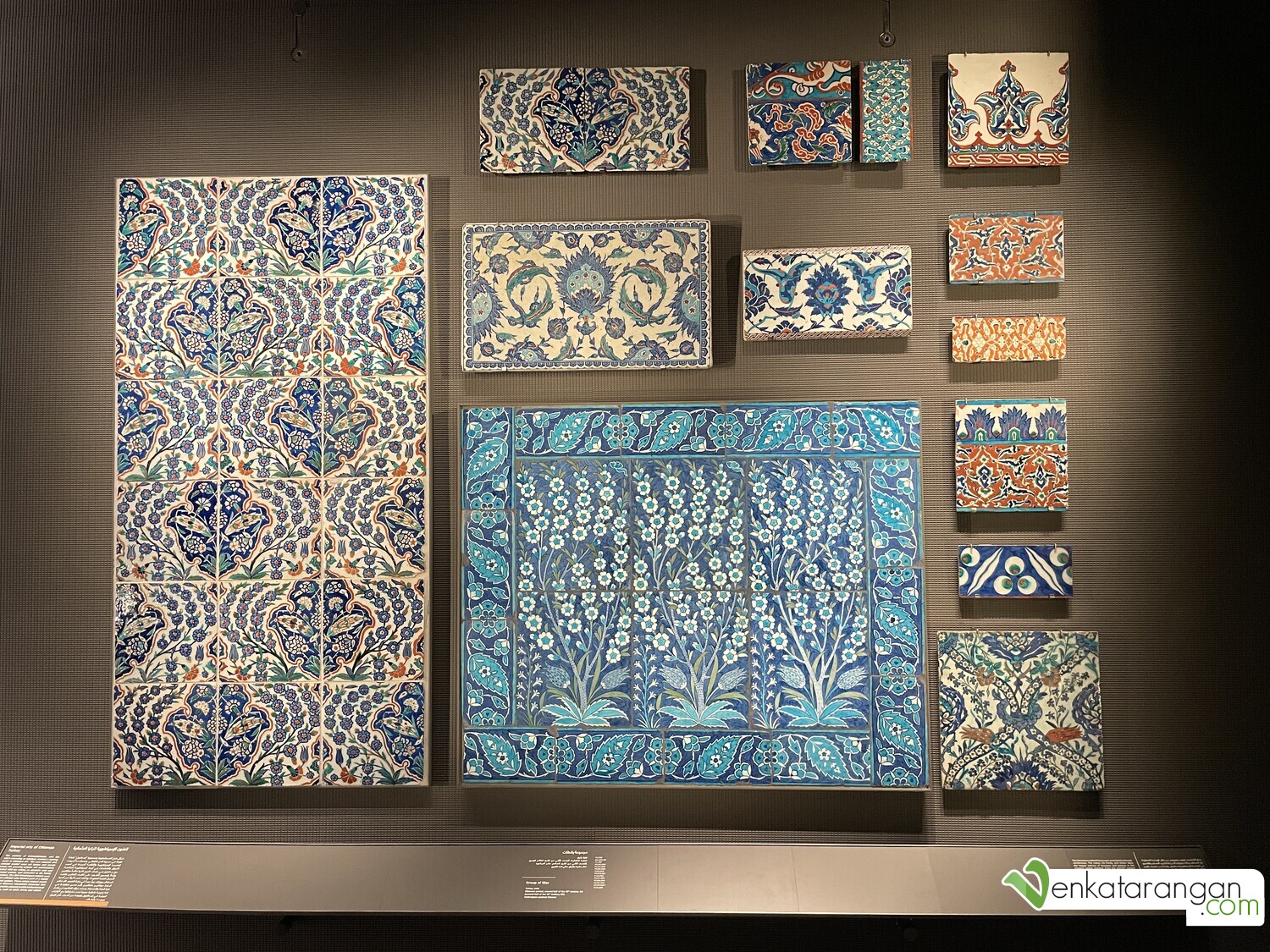
Among the most striking displays are the vibrantly hued tiles from the imperial arts of Ottoman Turkey, where master artisans fused intricate geometric and floral motifs into elegant ceramic works.


Manuscripts & Bookbinding
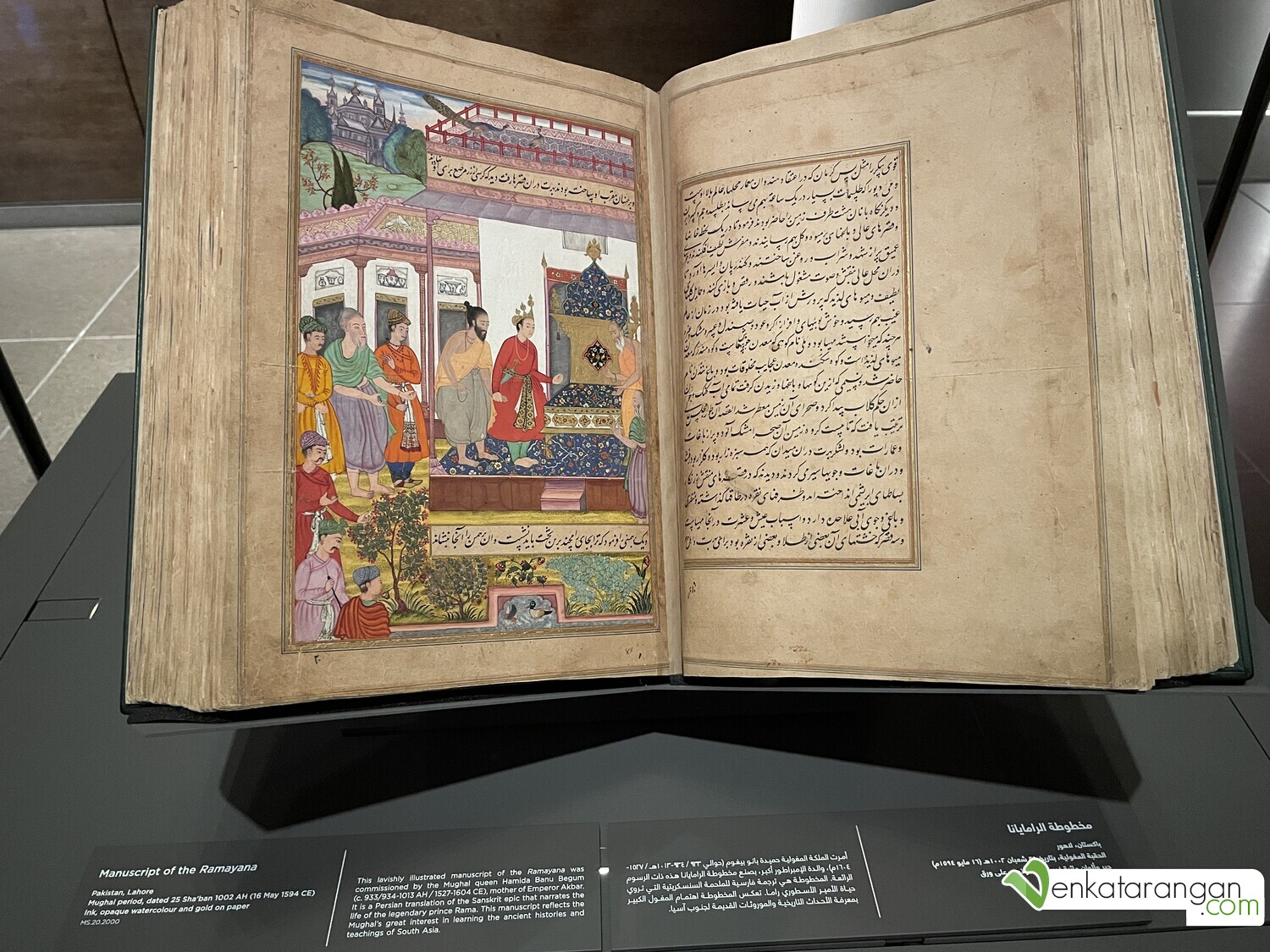
I noticed an important artefact, a multi-colour Manuscript of the Ramayana (from Lahore, around May 1594) which showcased the Mughal fascination for religious texts. Commissioned by Hamida Banu Begum (1527–1604 CE), mother of Emperor Akbar, it is a Persian translation of the Sanskrit epic. This manuscript reflects the Mughal’s great interest in learning the ancient histories and teachings of South Asia. [Details on this can be read from this piece in the Times of India article on 17th February 2024]

Moving along, I was drawn to a Holy Qur’an Manuscript in gold Kufic script, dating to the late 8th to early 9th century CE. Seeing such an ancient text, with its geometric calligraphy, was both humbling and inspiring.
Another treasure was the illustrated manuscript of the Diwan of Jami from the Safavid period (1563–1564 CE). The Timurid mystic Jarni (1414-1492 CE) is one of the most widely read poets in the Persian-speaking world, beautifully illustrated works by him were in high demand at the princely courts. This piece copied by Shah Muhammad al-Katib al-Shirazi from Iran once belonged to Ibrahim ‘Adil Shah II (1580–1627 CE) of Bijapur, reflecting the rich intercultural connections between Iran and southern India.
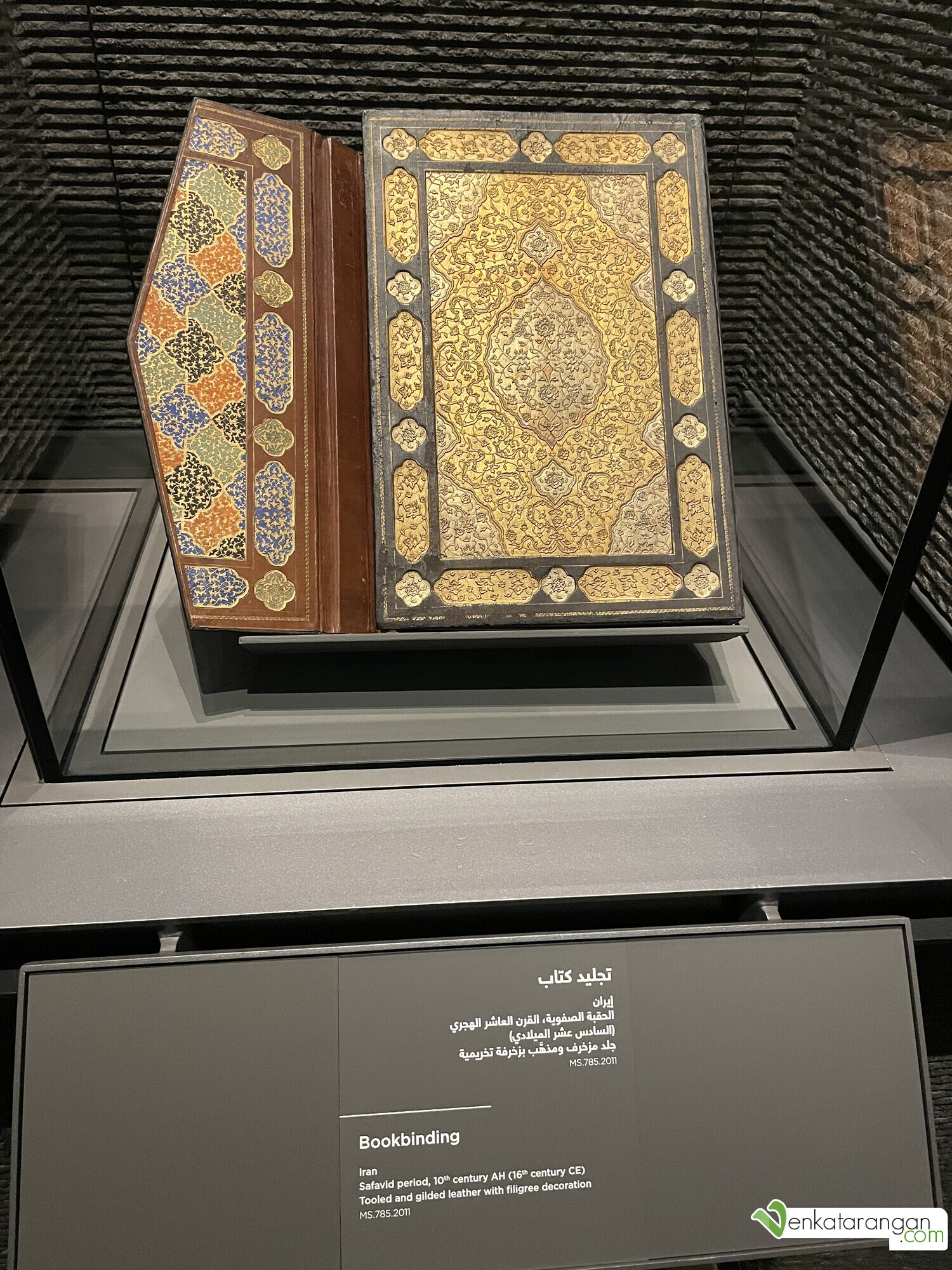
In the same area, I was treated to a display of exquisite Bookbinding from Safavid Iran (16th century CE), featuring tooled and gilded leather with fine filigree—proof of how artful Islamic manuscript preservation could be.


Royal Splendour & Sacred Spaces
In one gallery, a Portrait of Fath ‘Ali Shah Qajar (1816 CE, attributed to Mihr ‘Ali) revealed the opulence of 19th-century Iran and another was of Qajar Women in 19th-century Iran.
Nearby, Cavalry armour from the Ottoman period (late 15th–early 16th century CE, Turkey) testified to the martial prowess of that empire, with its forged iron alloy and leather fixtures.
Even more astonishing was The Damascus Room, completed in 1816/1817 CE—a 19th-century reception room painstakingly reassembled from 427 pieces. Stepping inside, I could imagine the lively exchanges that once took place in such a vibrant Syrian setting.
The Mughal era got its due as well: Throne or Table legs (19th–20th century CE), covered in gold sheeting and set with precious stones, conjured visions of the fabled Takht-i-Ta’us (Peacock Throne) from Emperor Shah Jahan’s reign.
I also admired a huge tray made for Sultan Al-Nasir Muhammed bin, dated 1341 CE, showcasing intricate metalwork.
Next in my exploration were the sacred textiles, most notably a Sitara of the Ka‘ba from the late Ottoman period. Beyond its profound religious significance, each kiswat al-Ka‘ba is a masterwork of artistry, featuring intricate embroidery and design elements that mirror the rich cultural heritage of the era and region in which it was produced. Standing before this precious textile, I couldn’t help but feel a deep reverence for the unbroken tradition of craftsmanship and devotion represented in every stitch.
Displayed close by was another deeply moving exhibit: a Curtain (Sitarah) from the Tomb of the Prophet in Medina. Observing the detailed patterns and calligraphy, I was reminded that these textiles are not merely museum pieces; they are living symbols of devotion, each carefully preserved to honour the legacy and reverence owed to Prophet Muhammad (peace be upon him) and to the heritage of generations past.
Closing out my visit, I stood in awe of a Royal Qur’an manuscript from Isfahan, created for Shah Sulayman (1666–1694 CE). Painted with ink, watercolour, and gold, it glimmered under the museum’s soft lighting and embodied the deep reverence for both artistry and devotion.
From a balcony, I was treated to a sweeping view of an expansive Iranian carpet with intricate, mesmerizing patterns—a testament to the mastery of weaving techniques and artistic vision in this region.
Nearby, intricately decorated Pen Boxes (dating to 1284 CE) showcased the elevated status of calligraphy in the Islamic world, illustrating the respect and admiration accorded to those who practiced this revered art.


After spending hours surrounded by these treasures, I left with a profound appreciation for how art transcends time and geography. Every artefact told a story of cultural exchange, royal patronage, and artistic devotion.
Post-Museum Wander: Flagpoles and Box Park
With our MIA visit complete, my friends and I decided on a short excursion to the nearby Flagpoles installation, where the flags of all World Cup participants flutter proudly—an apt reminder of the global unity that football inspires. From there, we headed to Box Park near the old Doha Port, which has a fun, modern aesthetic with container-style shops and cafés. We took a quick break at one of the cafés to enjoy a much-needed coffee, reminiscing about our favourite artefacts from the museum and the sense of timelessness they evoked.


This trip, with its blend of cultural exploration and the excitement of the World Cup, remains unforgettable. If you ever find yourself in Doha—whether for a sporting event or simply out of curiosity—do reserve a few hours for the Museum of Islamic Art. You’ll find yourself immersed in a world of art and heritage that’ll leave you eager to discover more.
Discover more from Mangoidiots.com
Subscribe to get the latest posts sent to your email.