Today (1st August 2019), my wife and I were fortunate to have a peaceful darshan at the Arulmigu Subramaniya Swamy Temple in Tiruchendur. I had travelled to Kanyakumari for a conference and landed in Tuticorin airport in the afternoon. We hired a local taxi from the airport, which first took us to Tiruchendur Temple and later dropped us at our hotel in Kanyakumari. The drive from Tuticorin airport to the temple took about 90 minutes, including a quick coffee stop. From there, it was another 90 minutes to Kanyakumari.

Tiruchendur is one of the six abodes (Arupadai Veedu) of Lord Muruga, and this temple is unique as it is located on the seashore. When we reached around 1:30 PM, it was just past noon—not a usual time for most devotees, who prefer early mornings or evenings. Being an off-season visit, the sun was bright but not unbearable. The main festival, Surasamharam, was still months away. We were one of the very few visitors at that hour—ours was the only car in the parking lot, which is usually packed. The long pathway by the beach was deserted. Most of the shops that usually serve the tourist crowd were shuttered. It felt like the whole place was taking a post-lunch break.

Inside the temple, too, it was quiet. There were no queues or crowds, and there was no need to buy a special ticket for Darshan. We walked through the cool corridors and reached the sanctum where Lord Senthilnadhar (Muruga) is enshrined. Only a couple of priests were there, and we had a serene aarathi. As we stepped out, we realised we had missed seeing the shrines of Sri Valli and Sri Devayanai, the consorts of Lord Muruga. Since the temple was so empty, we went back inside and had darshan of all three deities again, undisturbed.

One section of the temple wall caught my eye—it had nine painted panels narrating an important historical episode. These depict the story of the Dutch forces occupying the temple in 1649, stealing its sculptures, and how, after years, they were recovered and brought back by the local people. I’ve shared the photos of these panels in a separate post. It’s a powerful reminder of the temple’s deep-rooted heritage and resilience.

After spending about 45 minutes inside, we stepped out feeling blessed and resumed our journey to Kanyakumari.

A signboard near the shores of Thiruchendur Murugan Temple, Tamil Nadu, reading “கருணைக்கடலே கந்தா போற்றி” (Praise be to Kanda, the ocean of compassion), glorifying Lord Muruga.
A signboard near the shores of Thiruchendur Murugan Temple, Tamil Nadu, reads “கருணைக்கடலே கந்தா போற்றி” (Praise be to Kanda, the ocean of compassion), glorifying Lord Muruga.
The almost empty parking lot of Tiruchendur Temple (1st of August 2019)
The pathway along the seashore to the temple
திருச்செந்தூர் அருள்மிகு சுப்ரமணிய சுவாமி திருக்கோவில்
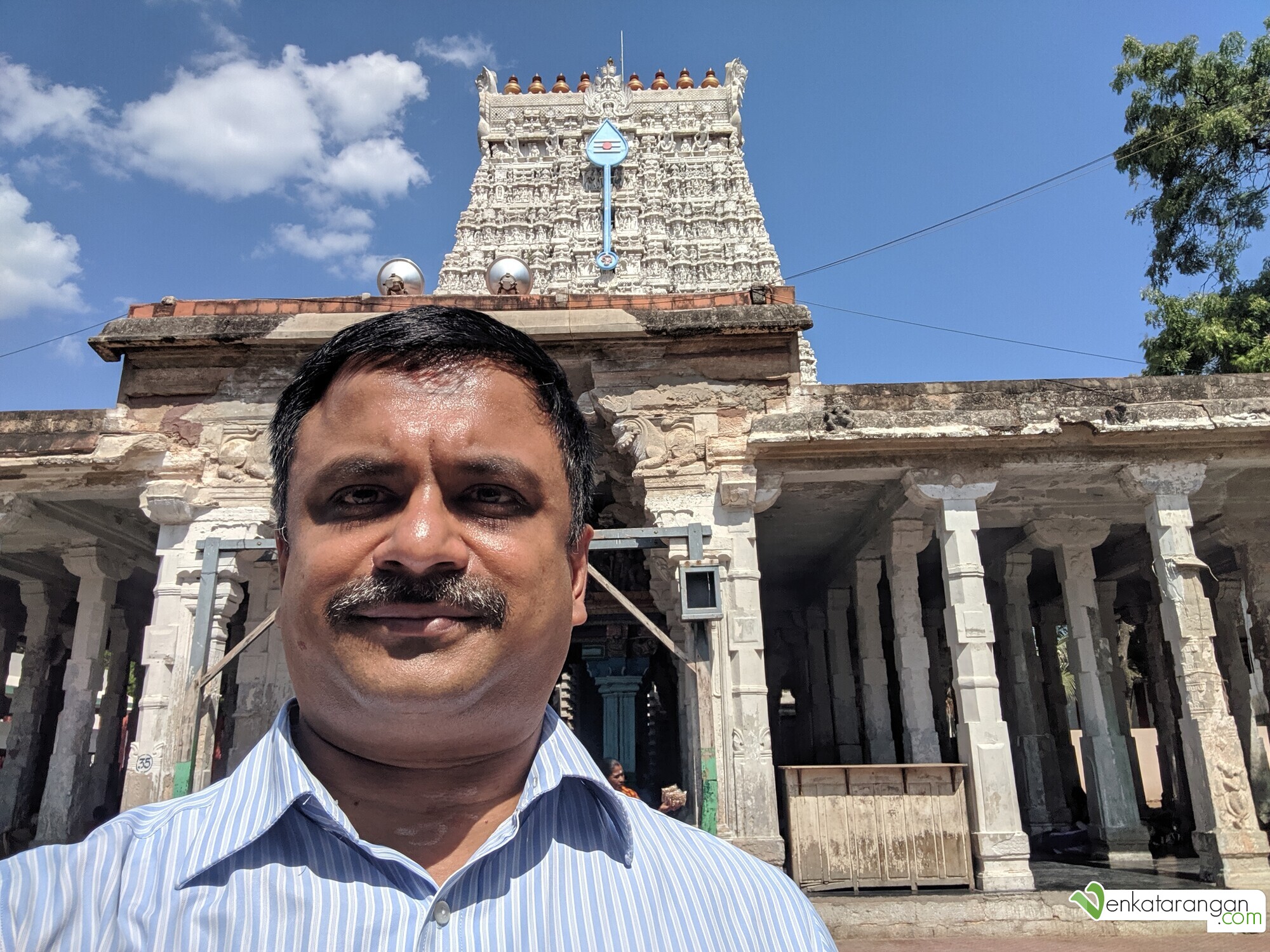
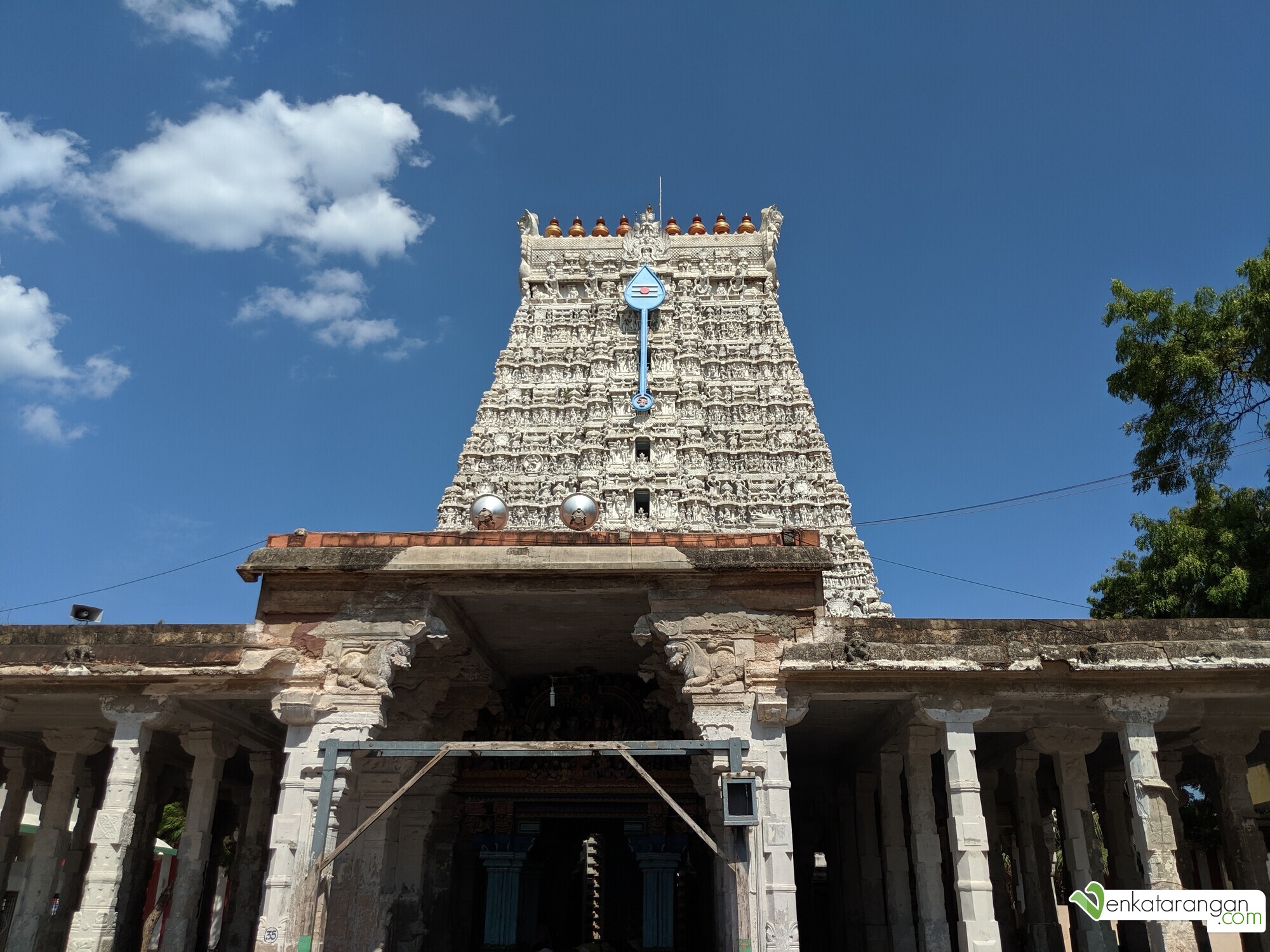
Venkatarangan Thirumalai posing in front of the Rajagopuram of Tiruchendur Hindu temple
Venkatarangan Thirumalai posing in front of the Rajagopuram of the Tiruchendur Hindu temple
View from the entrance into the sanctum
The long corridors around the sanctum of Lord Muruga in Tiruchendur
திருச்செந்தூர் சுப்பிரமணியசுவாமி கோயில் கருவறையைச் சுற்றியுள்ள பிரகாரம்
திருச்செந்தூர் சுப்பிரமணியசுவாமி கோயில் நுழைவாயில்
The temple elephant resting inside its enclosure at Thiruchendur Murugan Temple, Tamil Nadu.
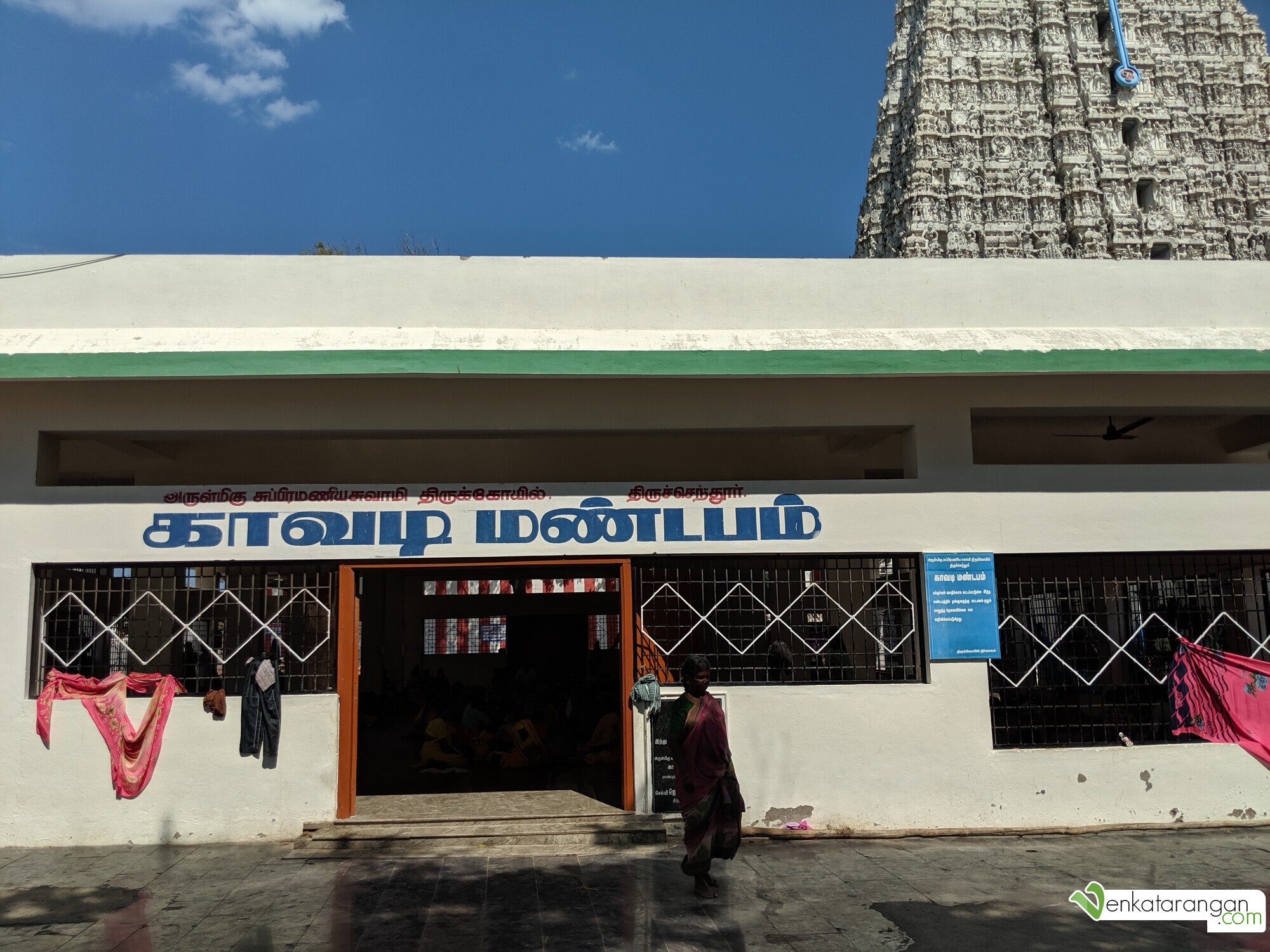
The Kavadi Mandapam (காவடி மண்டபம்). This is a resting and preparation hall for devotees undertaking the Kavadi ritual (காவடி விழா) — a key form of worship to Lord Muruga. The Kavadi is a symbolic physical burden carried by devotees as an offering and expression of devotion.
A few stalls a little farther away remained open. These vibrant shops were selling garlands, prayer items, toys, imitation jewellery, holy ash (விபூதி), turmeric powder (மஞ்சள் பொடி), miniature stone grinders (அம்மிக்கல்), wooden ladles, dolls, and souvenirs for pilgrims.
The beach at Tiruchendur lies along the Bay of Bengal, facing the Gulf of Mannar. Pilgrims take a ritual sea bath here before visiting the Murugan temple.
A mandapam (மண்டபம்) near the Tiruchendur Murugan Temple, built in traditional stone-pillared style. They provide shade and relief from the coastal heat, creating a community space that reflects the temple’s hospitality.
A mandapam (மண்டபம்) near the Tiruchendur Murugan Temple, built in the traditional stone-pillared style. They provide shade and relief from the coastal heat, creating a community space that reflects the temple’s hospitality.
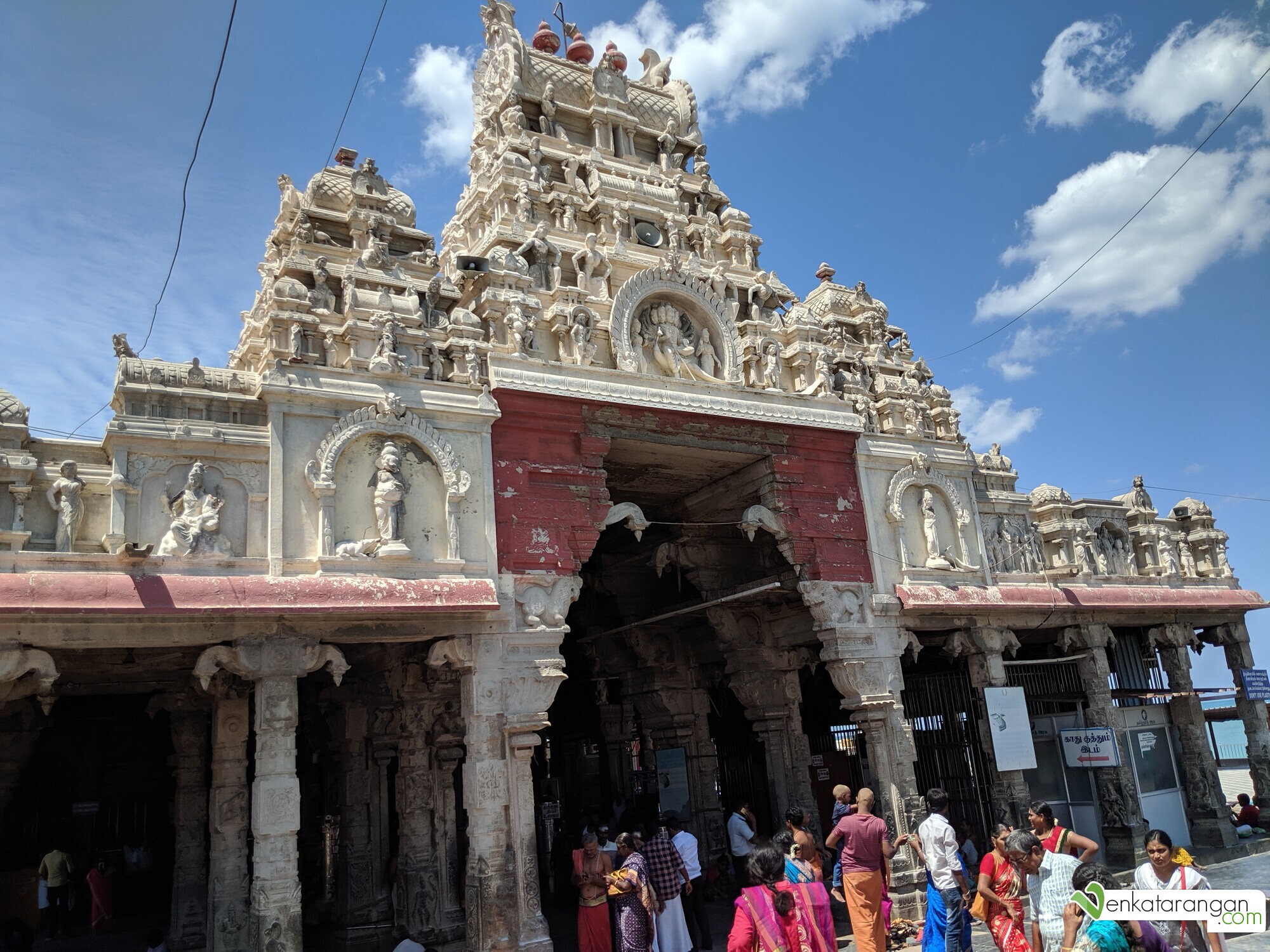
Arulmigu Subramanya Swami Temple, Tiruchendur, the Hindu temple dedicated to Lord Murugan

Discover more from Mangoidiots

Subscribe to get the latest posts sent to your email.

2 thought on “Holy Subramaniya Swamy Temple, Tiruchendur”
    1. Nowadays, that is post-pandemic, everywhere there is crowd. Yes, I went in 2019. I think it is to do with the lean season (pre festival), and the time of the day we went – afternoon 1 PM.

Comments are closed.

Discover more from Mangoidiots

Subscribe now to keep reading and get access to the full archive.

Continue reading

Discover more from Mangoidiots

Subscribe now to keep reading and get access to the full archive.

Continue reading