

Today, 16 January 2026, I spent a few hours at the Chennai International Book Fair, and I came back energised. Also thoughtful. This event, organised by the Government of Tamil Nadu for the last few years, is a serious and welcome effort. The intent is clear. Take Tamil writing to the world, and bring global writing closer to Tamil readers.
This year, the fair is being held at Kalaivanar Arangam on Walajah Road, Chennai. What stood out to me is that the panel discussions are now open to the public. You need to register online, but once you do, you can walk in and listen to publishers, translators, authors, and literary professionals from many countries. There are also a few book stalls near the entrance that are open to the general public. I had attended earlier editions of CIBF 2023 and CIBF 2024, but the panels were not accessible to the public. Those editions were also grand in scale, but this year feels more inclusive. The primary objective of this fair is still trade and networking. It brings together publishers from Tamil Nadu, other Indian states, and overseas. It also enables discussions around translation rights, licensing, and international distribution, where literary agents play a key role in connecting authors and publishers across languages and markets.

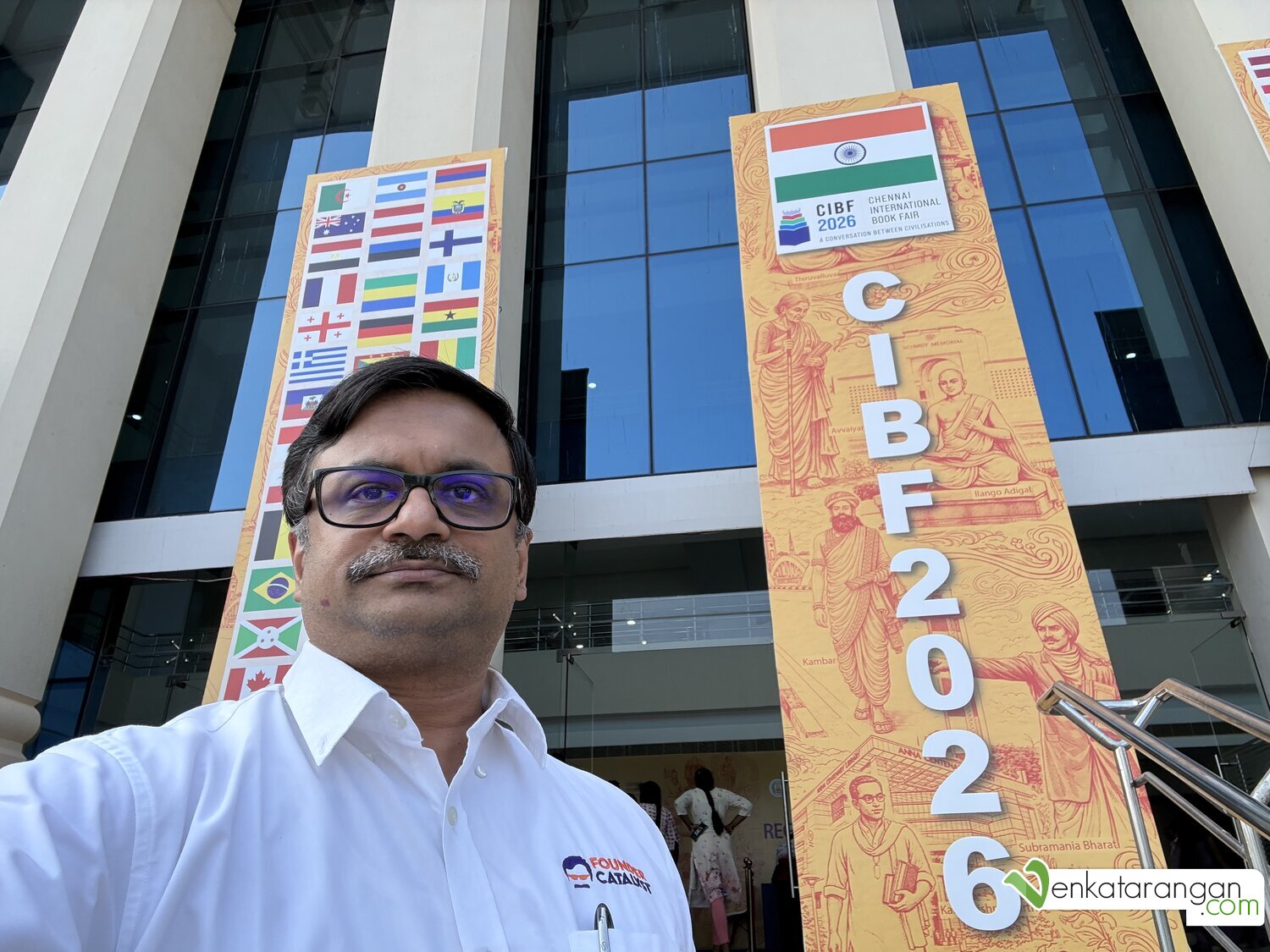
I listened to two panel discussions today. Both were engaging. If you care about books, languages, or publishing, do not miss this opportunity.
Panel one was titled The language tree. Puzzle or proof.
The host was Dr G N Devy. He is a linguist, cultural critic, and author. His well-known book is After Amnesia. Tradition and Change in Indian Literary Criticism.
He opened with a reference to Samuel P Huntington’s book The Clash of Civilizations and the Remaking of World Order. Published in 1996, it shaped global discourse by focusing on conflict between cultures rather than cooperation. Dr Devy pointed out how, especially in the United States, attention shifted from addressing poverty to focusing on religious and cultural clashes. He made a sharp observation. When the British claimed they came to civilise India, what they really meant was domination. The word civilisation, which sounds positive, has often been used to justify power.
He closed with a line that stayed with me. The world may be going down, but the word matters. And it must emerge successful.
One of the speakers was Dr R Balakrishnan. He was asked how his book, The Journey of a Civilisation, was. Indus to Vaigai, began. His reply was simple and memorable. History is not frozen snow. It is a flowing river.
He spoke about his background. He wrote his civil services examination in Tamil. He studied Tamil literature for his BA and MA. He also worked deeply with Odia language texts and with tribal communities across India. He said he is uncomfortable with the melting-pot idea, where identities disappear, like a metal losing its characteristics when it is alloyed. He was also not fully convinced by the American salad bowl model of pluralism, which still involves selection and exclusion. Instead, he described India as rainforest pluralism, where everything from fungi to monkeys coexists.
He spoke briefly about the tension between publisher constraints and author desperation. His book was crowd-funded. All proceeds were donated to the Roja Muthiah Research Library. So far, about Rs 1.5 crore has been contributed. The Tamil Nadu government is now publishing the book at a lower price to reach more readers.
When asked about his work with the Election Commission, he said he does not find it as satisfying as his research and writing. He also mentioned that he had declined awards from the Prime Minister to avoid being bound in any way in his intellectual quest.
Another speaker was Ms Mallika Ghosh, representing the publishing industry. She spoke about textbooks and how, in earlier decades, students eagerly awaited receiving new books at the start of every academic year. That excitement, she felt, has reduced today. She pointed out that a large number of digital content creators are from India. According to her, the future lies in a healthy mix. The tactile pleasure of physical books, the depth of writing, and the reach and interactivity of digital and video formats must work together. Publishers are not anxious about paper books disappearing. What matters is not forcing a medium, but ensuring good content reaches readers. Readers want to see their own culture reflected, even in digital content, through localisation.
The death of books has been predicted many times, but books still survive and will continue to exist for a long time. In this context, she referred to a quote falsely attributed to Thomas Edison. “When I invented the wife, I predicted the end of the book.” Incidentally, he never said this.
When asked whether publishers in India work under intimidation, she replied honestly. Yes, they do need to be careful. Every publishing decision is a choice. But there comes a point when clarity about content matters, and publishers do stand firm.
Dr G Arasentiran, former Head of the Department of Tamil at Madras Christian College and an expert in etymology, was another speaker.
He was asked how he emotionally responds to the loss of languages and words. His answer was balanced. Globally, this is tied to education and job opportunities. Today, even more than during British rule, Tamil is losing ground in daily use, largely due to economic pressures. He warned that Tamil society may become economically stronger in the future, but culturally dominated by others if this continues. The threat is real, and often invisible.
He argued that etymology, the study of word origins, is one way to reclaim linguistic depth. He gave a simple example. Many native Tamil speakers today say “rice” instead of “சோறு” because “Rice” sounds fashionable in English. We say curd rice instead of தயிர்ச் சாதம். This is not new. Tamil scholar U Ve Swaminatha Iyer was deeply upset by this trend even in his time. He once used the word சோறு and was questioned for using a term associated with peasants and lower castes. He was offended because he knew the rich Sangam literary history of that word.
A personal note here. I appreciated how Dr G N Devy handled this session. Dr Arasentiran wanted to read out a four-page prepared article. While it may have contained valuable insights, it would not have suited a forty-minute interactive panel. Professor Devy acknowledged Dr Arasentiran’s international reputation, research, and the audience’s familiarity with his work, and gently steered the discussion back to conversation. It was done with grace and respect.
This was a masterclass in courteous moderation.

Panel two was titled The Bestseller. Masterpiece, merchandise or myth.
The host was Ms Vera Tonko. She opened by saying that young adult fiction dominates sales today.
One speaker was Ms Claudia Kaiser. She said that in Germany, the term bestseller was not commonly used in the 1960s. She felt that the era of massive, long-lasting bestsellers like earlier decades was over. Translation, she stressed, does not happen without government funding. In that sense, the Tamil Nadu government’s support is commendable.
Ms Elena Pasoli added that apart from phenomena like Harry Potter, very few books survive long enough to be encountered by generations of readers worldwide. Today, publishers are more focused on identifying works that can travel across countries. She mentioned “Ti amo” by Hanne Ørstavik, which became popular in Italy. She also said it is nearly impossible to replicate the centuries-long success of a classic like The Adventures of Pinocchio by Carlo Collodi.
Mr Prashant Pathak spoke from his earlier experience working in Indian publishing houses. In India, he said, selling three thousand copies already counts as success. For him, a bestseller is a book that continues to sell over time. Today, what sells is visible instantly. It does not need loud claims. He pointed out that nearly half the books marketed as bestsellers are not truly so. Often, they are bestsellers within narrow subcategories. Around 70% of publishing in India is in English. He also noted that adult colouring, especially cosy colouring books, is doing well on platforms like Amazon.
He made a sharp observation about attention spans. In three to ten seconds, a reader decides. Dense and difficult content struggles unless it is compelling. He joked that, as children, parents tell us not to read novels. But later, we are expected to read Tagore. He said he would personally cap his books at 192 pages, price them affordably (say $7.99), and simply write on the title, “I love my book.”

One thing I kept hearing across sessions was this. Controversial, political, and divisive content attracts attention today. That is not healthy, but it reflects the world we live in.

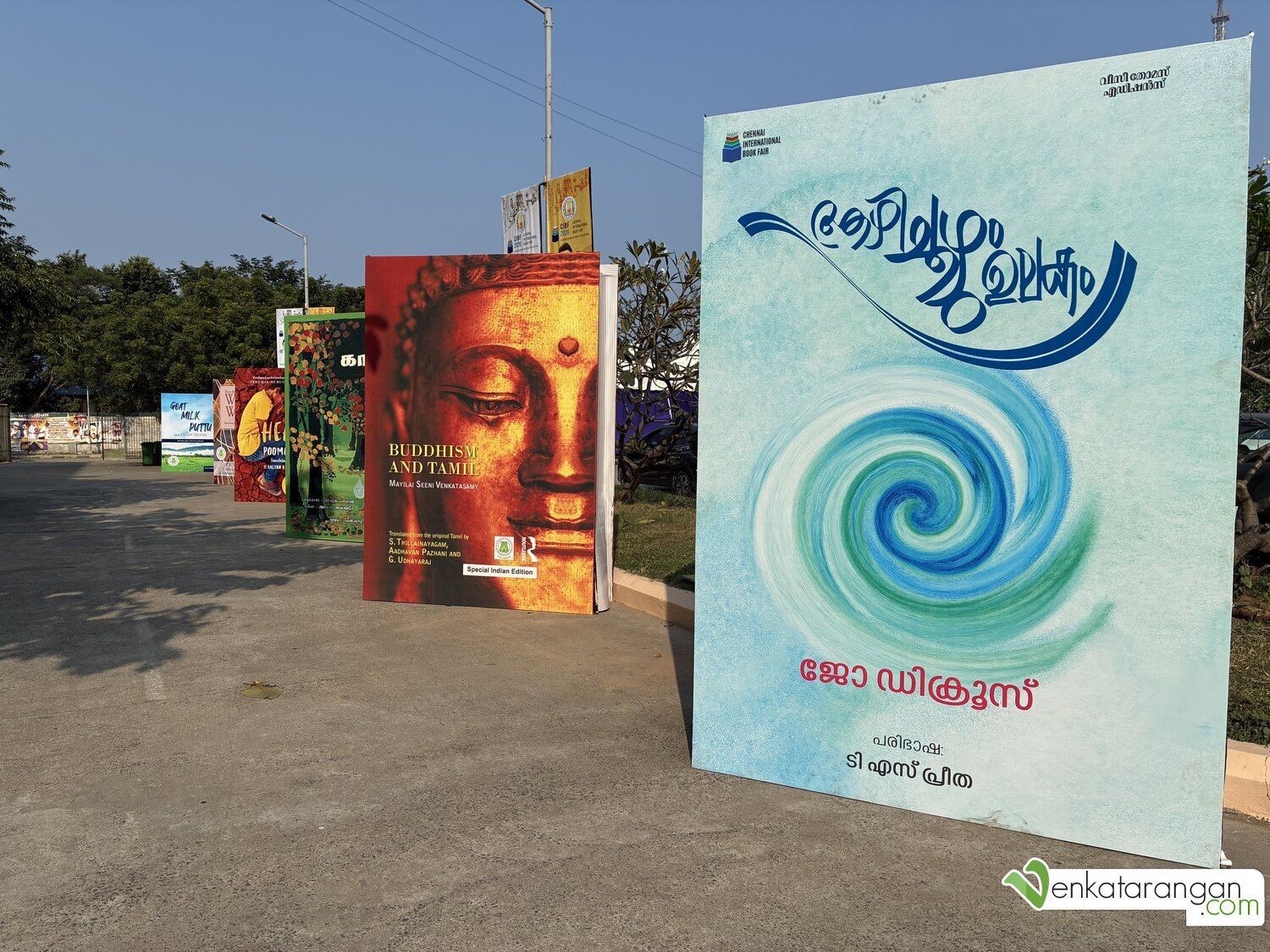

Overall, spending a day at the Chennai International Book Fair reminded me why such spaces matter. Conversations like these do not give easy answers. But they make us listen, reflect, and think beyond our bubbles.
Discover more from Mangoidiots
Subscribe to get the latest posts sent to your email.