
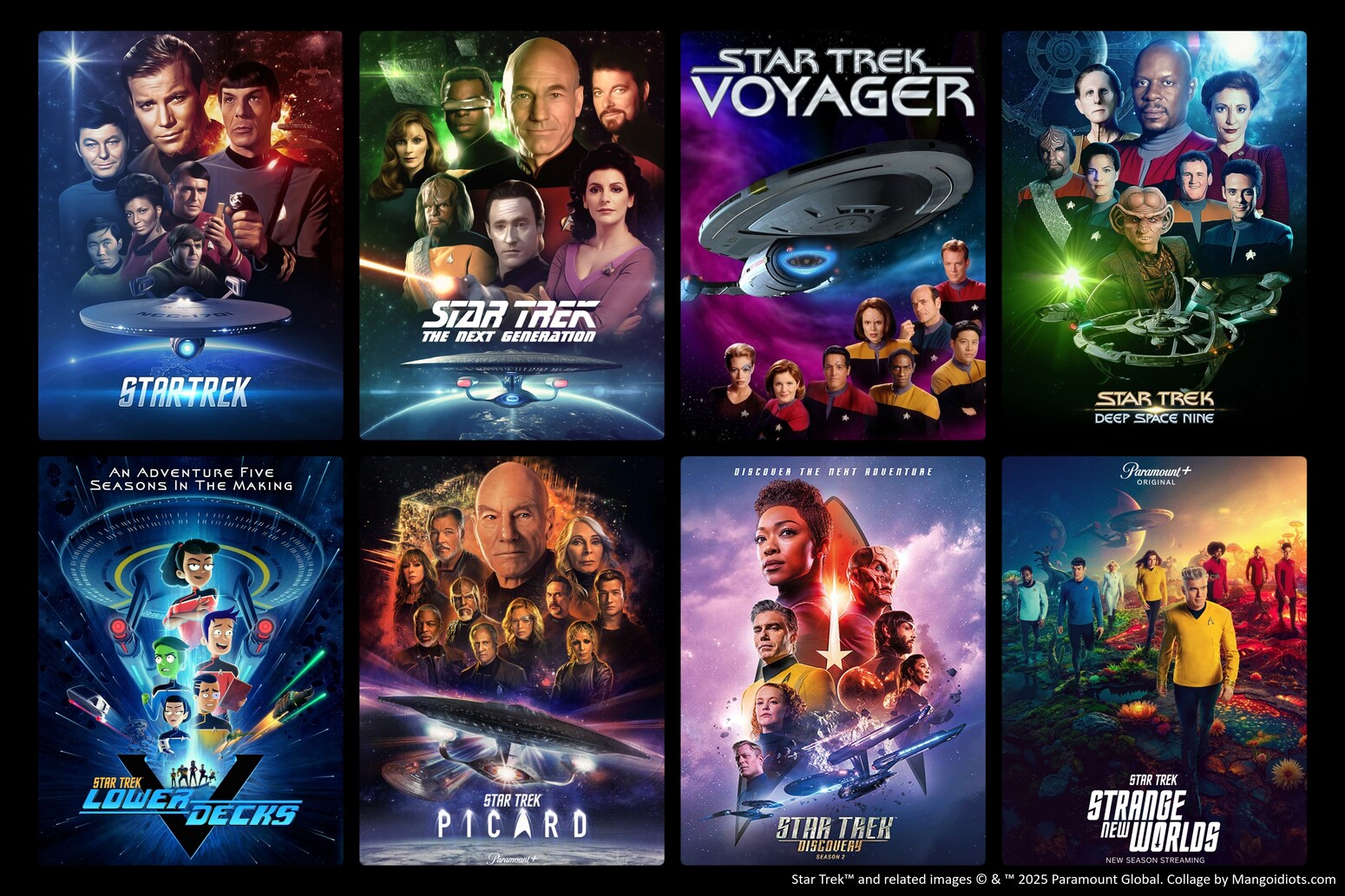
If I remember correctly, my first encounter with the Star Trek universe was in the mid-1990s. Star Trek: The Next Generation was being aired on Star Plus here in India, often at odd hours with no chance of a replay. I didn’t catch every episode, but I saw enough to be captivated. As a young man, seeing Wil Wheaton on screen as Wesley Crusher, offering a fresh perspective on the bridge, was a huge inspiration.
My real plunge into the franchise came a few years later, in the early 2000s, when a friend urged me to watch Voyager. For the first time, I followed a Star Trek series week to week. The opening episode, “Caretaker,” flung Captain Janeway’s crew seventy thousand light-years from home, setting up a seventy-five-year voyage. That mix of desperation and determination hooked me, and Voyager became my entry point into full-fledged Trek fandom. It wasn’t until the age of streaming that I could truly dive deep, watching every series in full, from TNG and Voyager to The Original Series, Enterprise, and Deep Space Nine.
The appeal of Star Trek for me goes far beyond starships. What truly resonates is its profound optimism for the future and its consistent message about the pointless nature of war. It cleverly holds a mirror to our own world, exploring sensitive topics like religion and societal norms by showing them practiced by a distant alien race. This allows for reflection without being preachy or defensive.
Each series offered something unique. Enterprise was fascinating for showing humanity’s first tentative steps into deep space. I particularly enjoyed the year-long Xindi arc and the cultural exploration in the episode “Home,” which gave a personal look into Vulcan family life through T’Pol and Trip. Even The Original Series, which I thought would feel dated, surprised me with its timeless plots. The original pilot, “The Cage,” which showed humans being studied in a zoo by powerful telepathic aliens, cleverly flipped the usual power dynamic. An episode like “All Our Yesterdays,” where the crew gets trapped in different eras of a planet’s history to escape a supernova, felt conceptually fresh even decades later.
In The Next Generation, I was always impressed by Captain Picard’s steadfast integrity. The episode “Darmok,” where he learns to communicate with a race that speaks only in metaphor, beautifully illustrates the power of shared stories. Captain Picard finally bridges the gap by narrating the Epic of Gilgamesh, leading to the now-famous lines like “Darmok and Jalad at Tanagra” and “Temba, his arms open”—phrases that have become internet meme sensations. In Voyager, I was completely invested in the crew’s journey. The emotional bond with Captain Janeway’s resolve, Neelix’s optimism, and the Doctor’s growth into a person was compelling. The episode “Virtuoso,” where the Hologram Doctor becomes a musical celebrity on a planet that had never known music, was a wonderful exploration of his character. The arc of Seven of Nine reclaiming her humanity after being severed from the Borg collective was also powerful.
In Deep Space Nine, I enjoyed the surprising business wisdom shared by the Ferengi bartender, Quark. But that series also introduced me to one of the most fascinating concepts in all of Star Trek: the Trill. The idea of a symbiont carrying the memories and experiences of multiple hosts, as seen with Jadzia Dax and later with Adira Tal in Discovery, is captivating. This tradition of passing knowledge and experience on even after the body perishes strongly reminds me of the idea of reincarnation in Hinduism, where a soul continues its journey through different lives.
The newer series have continued this tradition of bold storytelling. Discovery’s 900-year jump into the future was a daring move that paid off. I’ve also been enjoying Strange New Worlds, especially how it portrays Captain Pike carrying the heavy burden of his future, and how characters like Uhura and Spock have been wonderfully reimagined for today’s audience. I also liked how Picard explored the current public imagination around artificial intelligence, with the threat of synthetics taking over the galaxy, reflecting our own real-world anxieties about technology and what it means to be human. On a different note, I was surprised by how much I enjoyed the Lower Decks series, which offered a humorous and refreshing look at Starfleet life from the corridors, not the captain’s chair.
As an engineer, I am amazed by the sheer effort the creators invested in building this fictional world. My fascination isn’t about whether a warp drive is scientifically plausible, but in the depth of thought that went into imagining how it might work, right down to the detailed technical manuals.
Ultimately, the movies, while enjoyable, have never had the same impact on me. The long-form narrative of the series allows for the deep exploration of characters and ideas that make Star Trek so special. It has certainly had a subconscious impact on how I think about complex issues, teaching me that optimism is practical and that diverse teams are best equipped to solve impossible problems.
Now, with Starfleet Academy on the horizon, I find myself looking forward with that same old excitement. I am keen to see how the show will portray raw cadets from different worlds being forged into a cohesive team. It’s a theme that gets to the very heart of Star Trek: the hope that we can come together to explore, learn, and build a better future. For me, Star Trek is more than fiction; it’s a working draft of a kinder, more principled world.
Discover more from Mangoidiots
Subscribe to get the latest posts sent to your email.